Category: Digital Marketing Updates

  • Digital Marketing Trends 2026: AISO, Agents & The End of “Clicks”

    Digital Marketing Trends 2026: AISO, Agents & The End of “Clicks”

    Key Takeaways:

    • SEO is now AISO: You are no longer optimizing for clicks; you are optimizing to be the source for AI answers (Zero-Click visibility).
    • The “Open Web” is dying: Ad budgets are fleeing display networks (-30%) and moving to “walled gardens” like newsletters, communities, and creators.

    • Agents are the new buyers: By the end of 2026, a significant chunk of your “traffic” will be non-human AI agents vetting your pricing and specs.

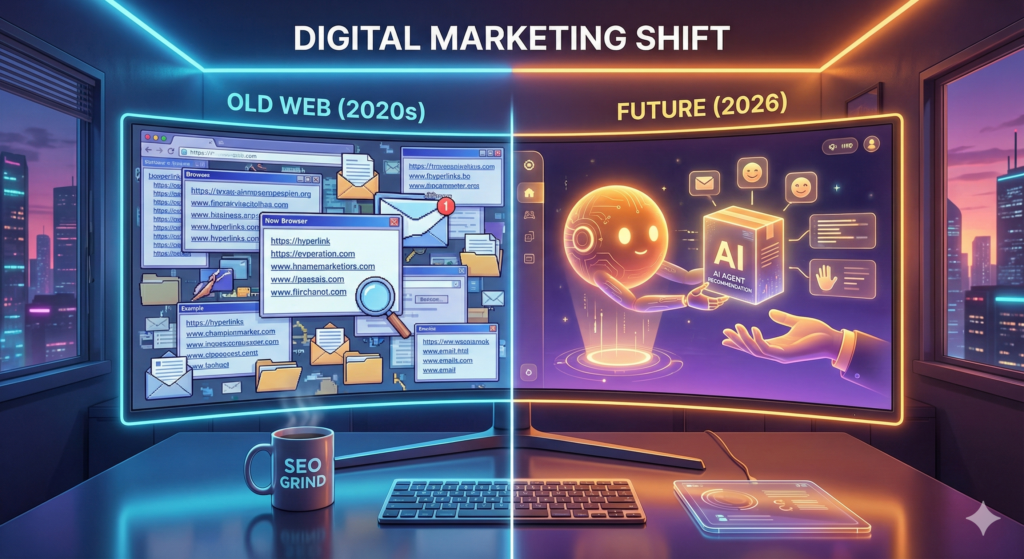
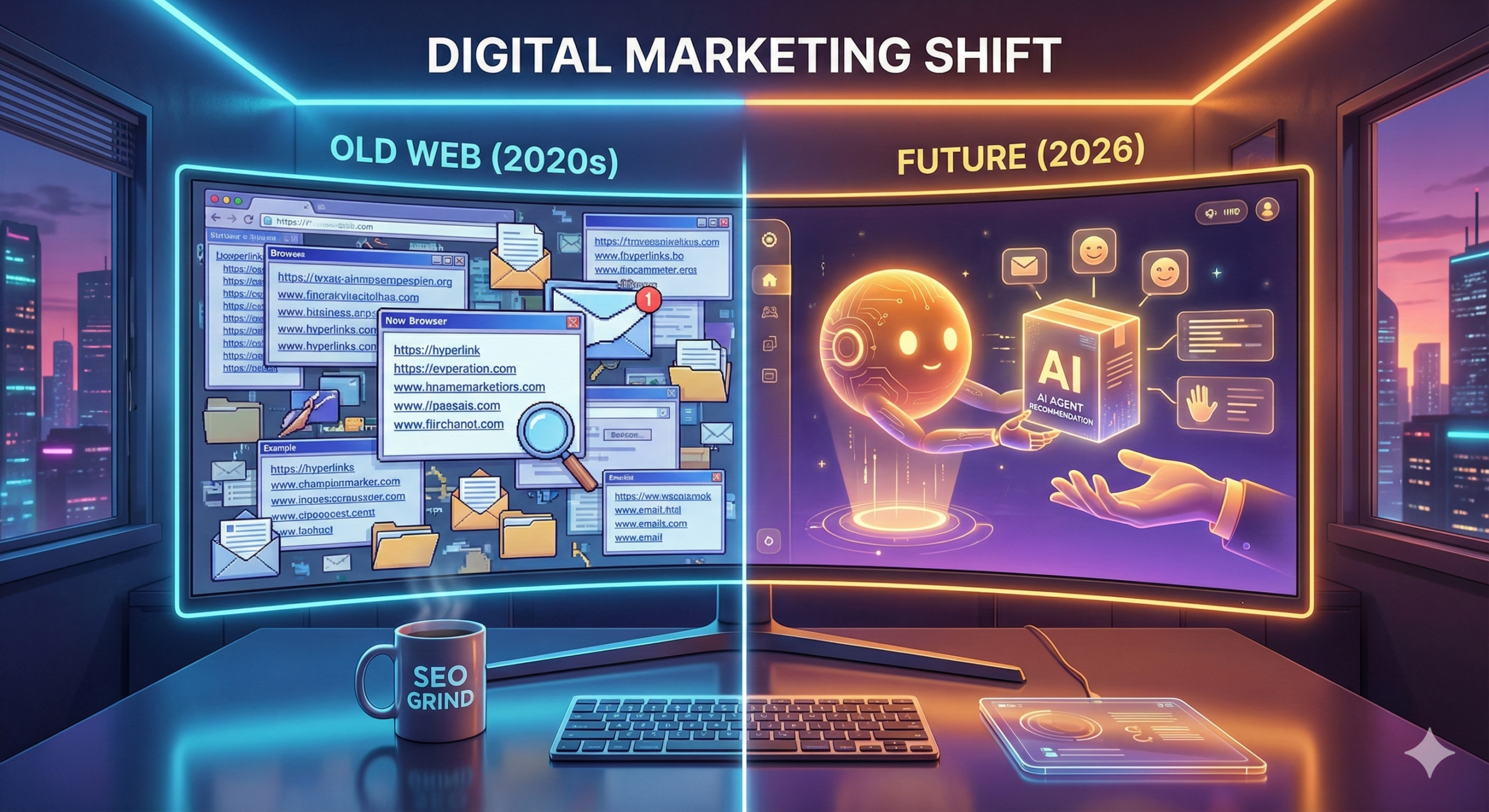
    In 2026, the internet isn’t just changing—it’s shrinking.

    Users are leaving the open web for walled gardens. AI agents are buying products on behalf of humans. And “ranking #1 on Google” doesn’t mean what it used to. If you feel overwhelmed, you’re not alone; the playbook we used for the last decade is officially obsolete.

    But here is the big idea: AI isn’t replacing marketers. It’s forcing us to stop being robots and start being human again.

    Here is what you need to know to survive the shift.

    Is your brand invisible to AI Agents? Don’t guess.
    Get your free 2026 AISO Audit to see if ChatGPT and Gemini actually recommend you.


    Trend #1: AISO & The “Zero-Click” Reality

    Here is the hard truth: Traditional organic traffic is dropping. Gartner predicted it would fall by 25% by 2026, and we are seeing it happen live. Why? Because users aren’t clicking blue links anymore. They are getting answers directly from Google AI Overviews, Perplexity, and ChatGPT.

    This births a new discipline: AISO (AI Search Optimization).

    In the old days (2023), you wrote content to get a click. Today, you write content to be cited. If an AI summarizes your article but doesn’t send a click, you still win “Share of Model”—branding at the neural network level.

    In short:

    Stop chasing volume. Start chasing authority. If an AI can’t verify your facts from a second source, it won’t cite you.

    FeatureTraditional SEO (2020)AISO / GEO (2026)
    GoalRank #1 for a keywordBe the “Answer” in the snippet
    MetricOrganic Traffic / ClicksBrand Mentions / Citations
    Content2,000 words + Keyword stuffingData-rich tables + unique stats
    TargetHuman ReaderLLMs + Human Reader

    Trend #2: Shoppable Video (The “Watch-to-Buy” Pipeline)

    If you are asking users to watch a video, then click a link, then add to cart—you have already lost them. The funnel has collapsed.

    In 2026, Shoppable Video is the default. Platforms like TikTok Shop and YouTube Shopping have normalized “checkout in stream.” Users trust creators more than faceless brands. They want to see the texture, hear the sound, and buy it without leaving the app.

    “Short-form video now commands 82% of internet traffic. Brands ignoring this aren’t just losing views; they are invisible to Gen Z.”Wildnet Technologies, 2026 Report

    In short:

    Your video isn’t just content; it’s your storefront. Integrate “Buy Now” tags directly into your Reels and Shorts.


    Trend #3: Marketing to Machines (Agentic Commerce)

    This is the wildest shift of 2026. Your next customer might not be a person. It might be an AI agent named “PersonalGPT” tasked with finding the best CRM under $50/month with API access.

    If your pricing page is hidden behind a “Request Demo” form, the AI agent will skip you. It can’t fill out forms effectively, and it hates friction. You must make your product data machine-readable.

    • Schema Markup: It’s not optional anymore.

    • Transparent Pricing: Agents need hard numbers to compare.

    • API Documentation: Must be publicly scannable.

    In short:

    Humans read emotions; Agents read data. If your specs aren’t clear to a robot, you won’t even make the shortlist for the human.


    Trend #4: The Return of “Vibes” & Community

    With AI generating billions of mediocre articles daily, “trust” is at an all-time low. Forrester predicts that display ad budgets will drop by 30% in 2026 because consumers are fleeing the “Open Web” (news sites full of ads) for “Walled Gardens” (Substack, Discord, WhatsApp, private Slack groups).

    People want vibes—human connection, vetted opinions, and “dark social” recommendations that can’t be tracked by Google Analytics.

    • Action: Sponsor a niche newsletter.

    • Action: Build a brand community on WhatsApp or Discord.

    • Action: Focus on “Founder-led sales”—people trust people.

    In short:

    The open web is for reach; walled gardens are for revenue. Move your best customers into a community you own.


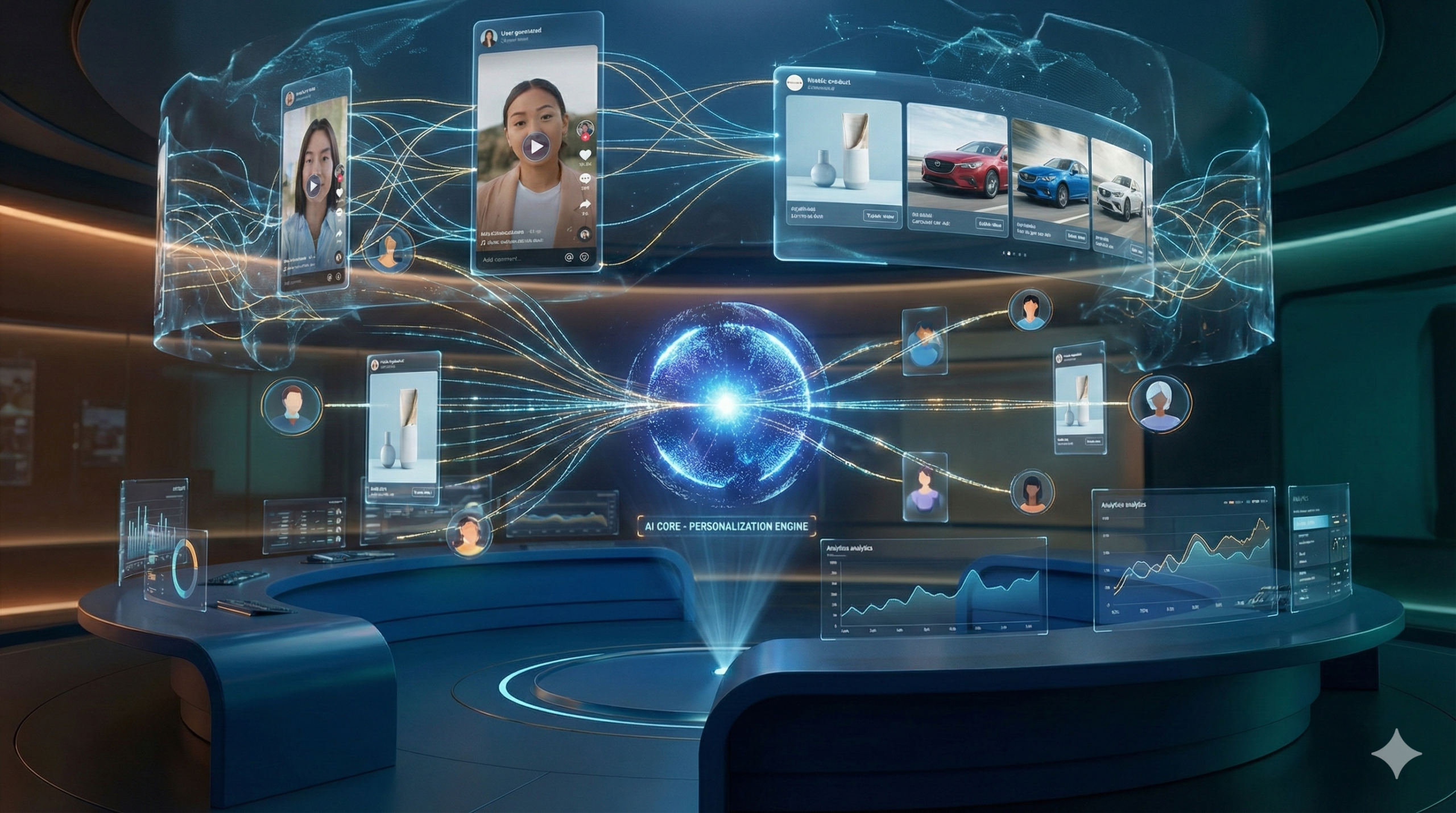
    Trend #5: Hyper-Personalization 2.0 (Predictive, Not Reactive)

    “Hi [First Name]” is not personalization. That’s a database merge field.

    True personalization in 2026 is predictive. It’s using AI to know a customer needs a refill before they run out. It’s changing your website’s homepage based on the weather in their city or their browsing behavior five minutes ago.

    Mini-Case: How Starbucks Gamified Habit Formation

    Starbucks isn’t just selling coffee; they are selling dopamine. In 2025/26, they doubled down on their “Deep Brew” AI.

    • The Tech: Their app doesn’t just suggest “Coffee.” It suggests “The Iced Latte you usually buy on rainy Tuesdays,” pushing a notification right when the forecast turns gray.

    • The Result: The app now drives over 31% of total U.S. sales.

    • The Lesson: They used data to reduce the mental load of deciding what to order.

    In short:

    Don’t just use data to retarget. Use data to predict and serve the customer’s future self.


    Common Mistakes in 2026

    • Creating content for keywords: AI summarizes answers. If you just repeat what’s already out there, you are ignored. You need unique opinions or data.

    • Gating all your content: AI agents can’t read gated PDFs. Ungate your technical specs so LLMs can train on them.

    • Ignoring “Dark Social”: You think your traffic is “Direct” in Analytics? It’s probably coming from a WhatsApp link you can’t track. Stop obsessing over perfect attribution.

    • Fearing AI voice: Don’t let AI write your final draft. Use it for research, but keep the “human vibration” in the final edit.


    FAQs: What Marketers Are Asking

    1. Is SEO dead in 2026?

    No, but “10 blue links” are dying.

    SEO has evolved into AISO (AI Search Optimization). You are optimizing for visibility in AI summaries (ChatGPT, Gemini) rather than just ranking a page on Google.

    2. How do I optimize for AI Overviews (SGE)?

    Focus on direct answers and data tables.

    AI loves structure. Use clear <h2> headers, bullet points, and data tables. Answer the “Who, What, How” in the first 30 words of your section.

    3. What is “Agentic Marketing”?

    Marketing to AI bots, not just humans.

    It involves ensuring your product details (price, specs, compatibility) are publicly accessible and structured so buying bots can “read” and recommend your product to their human owners.

    4. Should I start a podcast or newsletter?

    Yes, own your audience.

    With ad costs rising and social algorithms hiding links, an owned email list or podcast subscriber base is your only insurance policy against “rented land.”

    5. How much should I rely on AI for content creation?

    Use it for 80% of the work, but the last 20% is crucial.

    Use AI for outlines, research, and first drafts. But a human must add the stories, the empathy, and the unique point of view, or you will sound like noise.

    6. What is the biggest social media trend for 2026?

    Less polish, more authenticity.

    Users are tired of filters. “Lo-fi” video content shot on phones often outperforms high-budget studio productions because it feels real and trustworthy.

    7. Is email marketing still effective?

    More than ever.

    As social reach declines, the inbox remains the one place you have a direct line to your customer. But you must offer value, not just sales pitches, to avoid the spam folder.

    8. What metrics matter most now?

    Trust and Engagement, not just impressions.

    Look at “Time on Page,” “Return Visits,” and “Brand Search Volume.” These indicate real affinity, whereas impressions can be easily inflated by bots.

    9. How does privacy affect my ads?

    First-party data is king.

    You can no longer rely on third-party cookies. You need to collect your own data (emails, preferences) directly from customers to run effective campaigns.

    10. What is “Shoppable Video”?

    Buying directly inside a video player.

    Platforms like TikTok and Instagram allow users to tap a product in a video and checkout instantly. It reduces friction and captures impulse buys effectively.


    Conclusion

    The digital marketing landscape of 2026 is less about “hacking algorithms” and more about earning trust.

    The algorithms are now AI supercomputers that can smell a fake from a mile away. They prioritize authoritative data, unique human perspectives, and brands that people actually search for by name.

    Don’t try to out-robot the robots. Be the most helpful, authentic human in your niche, and the AI will have no choice but to cite you.

    Ready to future-proof your strategy?

    Book a 1:1 Strategy Call with Scribo Media — Let’s build a roadmap that targets Humans and their AI Agents.


    Sources & Backlinks

    1. Top digital marketing trends and predictions for 2026Google Business Profile — Jan 2026

    2. AI Search Trends for 2026: What CMOs Need to Do NowExposure Ninja — Oct 2025

    3. The 5 Big Trends that Will Dominate Marketing in 2026SparkToro — Jan 2026

    4. Predictions 2026: The Race To Trust And ValueForrester — Jan 2026

    5. Video Marketing Trends 2026Wildnet Technologies — Jan 2026

    6. What is Hyper-personalization?IBM — June 2025

    • All Posts
    • Digital Marketing
    • Meta- Facebook & Instagram
      •   Back
      • Digital Marketing Updates
      • Lead Generation
      • Client Acquisition
      •   Back
      • Meta Algorithm Updates
    Load More

    End of Content.

  • The Biggest Digital Marketing Updates of 2025: What Changed and Why It Matters Now

    The Biggest Digital Marketing Updates of 2025: What Changed and Why It Matters Now

    An overview of the most impactful updates in the world of digital marketing and how marketers can prepare themselves.

    The Biggest Digital Marketing Updates of 2025_20251231

    Quick Summary:

    This blog covers the nine most critical and biggest digital marketing updates of 2025, including Google’s shift to answer-based search, the rise of generative search, Meta’s Andromeda ads update, AI-driven content creation, AI search discovery, LinkedIn’s authority-focused algorithm, short-form video maturity, performance marketing attribution changes, and the emergence of AISO. Each section explains what changed, its impact, what marketers must do now, and how these updates will shape the future of digital marketing.

    2025 was not just another year in digital marketing — it was a turning point.

    Search engines stopped behaving like directories, advertising platforms handed control to AI, content creation exploded, and discovery expanded far beyond Google.

    Strategies that worked for years suddenly felt outdated. New rules emerged quietly, often without official announcements, forcing marketers to adapt in real time.

    This blog is Scribo Media’s complete breakdown of the nine most important digital marketing updates of 2025, explaining what changed, why it mattered, how it impacted marketers, and what the future looks like from here.

    1. Google Search in 2025: How SEO Shifted from Rankings to Answers

    Quick Summary – Google Search in 2025

    Google Search shifted from ranking websites to answering questions directly. SEO became less about clicks and more about visibility, trust, and structured understanding. Marketers now need entity-driven, experience-backed content that performs even in zero-click environments.

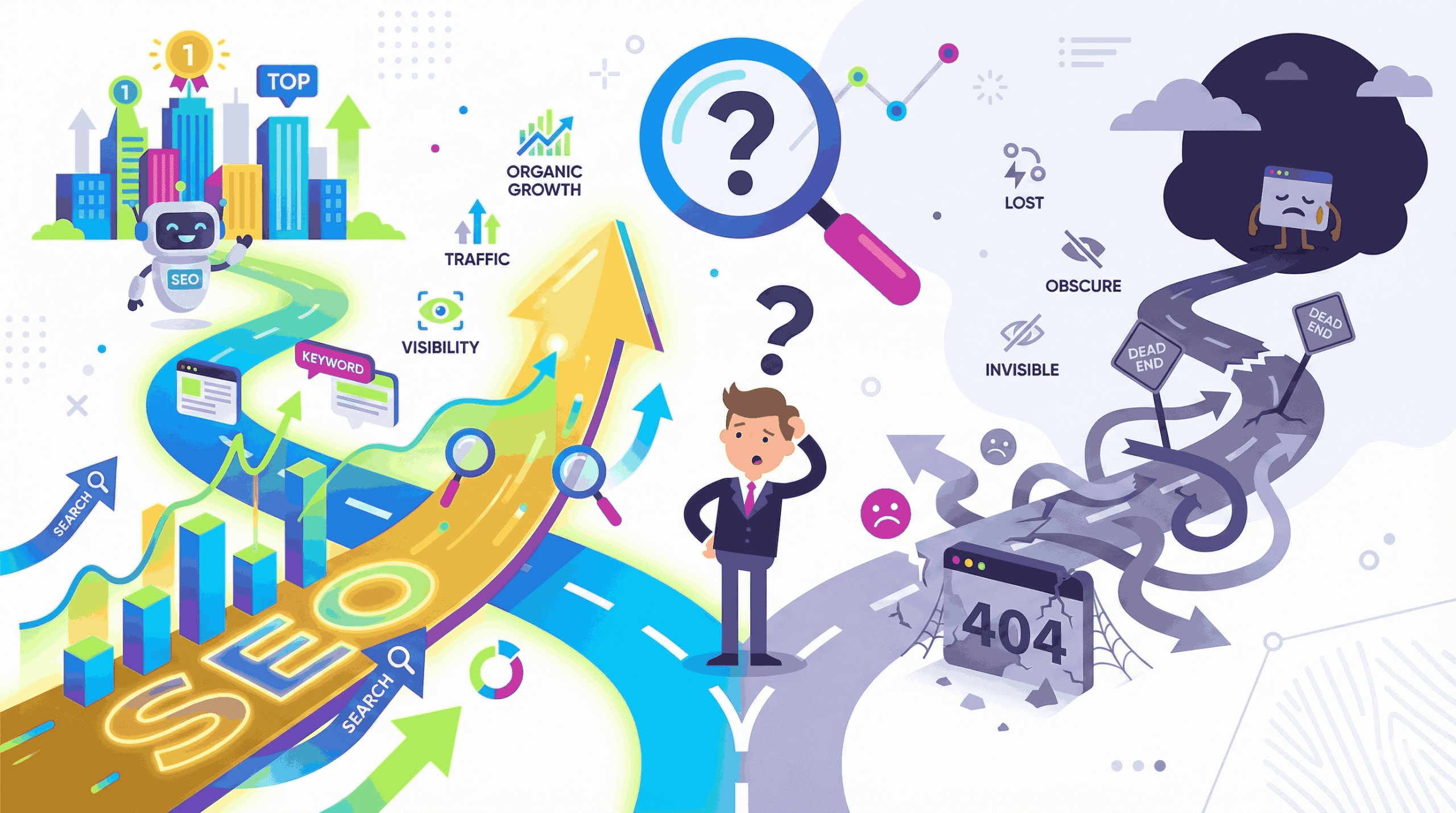
    2025 fundamentally changed how Google Search works. For years, SEO success meant ranking on page one and driving clicks. In 2025, that definition quietly broke.

    Users now get answers before they ever reach a website. Search results increasingly look less like lists of links and more like AI-powered explanations. This single shift forced marketers to rethink what SEO even means.

    At Scribo Media, this was the year we stopped asking “How do we rank?” and started asking “How does Google understand, trust, and explain our content?”


    What the Google Search update was?

    Throughout 2025, Google rolled out multiple core and helpful content updates that reinforced one consistent message: content must be genuinely useful, well-structured, and trustworthy.

    Key pillars Google strengthened were Helpful Content, E-E-A-T (Experience, Expertise, Authoritativeness, Trustworthiness), and entity-based understanding. Instead of rewarding pages stuffed with keywords, Google focused on whether content clearly explained a topic, answered related questions, and came from credible sources.

    AI-driven summaries, featured explanations, and expanded knowledge panels became far more common across search results.


    How it impacted digital marketing

    One of the biggest shocks for marketers was seeing impressions remain stable while clicks dropped. This confused many businesses initially, but the reason was simple: zero-click searches became the norm for informational queries.

    Websites that relied on thin content or surface-level blog posts saw visibility decline. On the other hand, brands publishing in-depth, structured, experience-backed content gained exposure inside Google’s answers — even if users didn’t click through.

    SEO stopped being purely a traffic game and became a visibility and authority game.


    Current status (end of 2025)

    Google Search now behaves more like a knowledge engine than a directory. Rankings still exist, but they are no longer the sole indicator of success. Content that is easy for Google to summarize, verify, and contextualize performs best.

    At Scribo Media, we now measure SEO success not only by clicks, but by search presence, answer inclusion, and brand visibility.


    What digital marketers need to do now?

    • Move beyond keyword-focused SEO to entity-driven SEO
    • Write content that answers a topic completely, not partially
    • Add real experience, examples, and expertise signals
    • Optimize content to perform even when clicks don’t happen

    SEO strategy must now align with how Google reads and explains content — not just how it indexes it.


    Future outlook

    SEO will continue evolving into Search Experience Optimization (SXO). Brands that educate clearly, structure information logically, and demonstrate real expertise will dominate future search results.

    • All Posts
    • Digital Marketing
    • Meta- Facebook & Instagram
      •   Back
      • Digital Marketing Updates
      • Lead Generation
      • Client Acquisition
      •   Back
      • Meta Algorithm Updates
    Load More

    End of Content.

    2. Google SGE in 2025: What Generative Search Means for SEO and Content

    Quick Summary – Google SGE

    Google’s Search Generative Experience introduced AI-generated summaries that changed how users consume information. Being cited inside summaries became as important as ranking, forcing marketers to optimize for AI readability and topical authority.

    Google’s Search Generative Experience (SGE) became one of the most disruptive developments of 2025. What began as an experiment quickly turned into a permanent layer of Google Search.

    SGE changed not just how results appear, but how users consume information.

    What the update was

    SGE introduced AI-generated summaries that sit above traditional search results for complex and multi-intent queries. Instead of showing ten links, Google now synthesizes information from multiple trusted sources into a single, coherent response.

    These summaries often include comparisons, step-by-step explanations, and follow-up prompts, keeping users engaged without leaving the search page.


    How it impacted digital marketing

    For many websites, organic traffic dropped — but visibility didn’t disappear. Instead, it shifted. Brands included in AI summaries gained authority exposure, even when users didn’t click.

    This forced a mindset change: being referenced became as important as being visited. Content that was unclear, poorly structured, or lacked authority was excluded from summaries altogether.

    SEO became less about ranking first and more about being citation-worthy.


    Current status

    By the end of 2025, SGE is deeply integrated into Google Search across many regions and industries. Informational queries are increasingly answered directly, while transactional queries still lead users to websites.

    At Scribo Media, content strategies now deliberately aim for AI summary inclusion, not just organic rankings.


    What digital marketers need to do now

    • Write content in clear, structured sections
    • Use definitions, comparisons, and step-by-step formats
    • Ensure factual accuracy and topical depth
    • Optimize content to be summarizable by AI

    Content that is vague or bloated will not survive in generative search environments.


    Future outlook

    Generative search is not replacing SEO — it is redefining it. In the future, brands will compete to become the source Google relies on, not just another result on the page.

    3. Meta Andromeda Explained: The Facebook Ads Update That Changed Everything

    Quick Summary – Meta Andromeda

    Meta replaced interest-based targeting with AI-driven ad delivery. Creative quality became the biggest performance factor, while narrow targeting lost effectiveness. Advertisers now need creative systems, not audience hacks.

    If 2025 felt unusually unstable for Facebook Ads and Instagram Ads, it wasn’t your imagination. Meta’s Andromeda update fundamentally changed how ads are delivered across its platforms.

    For many advertisers, strategies that worked for years suddenly stopped performing.


    What the update was

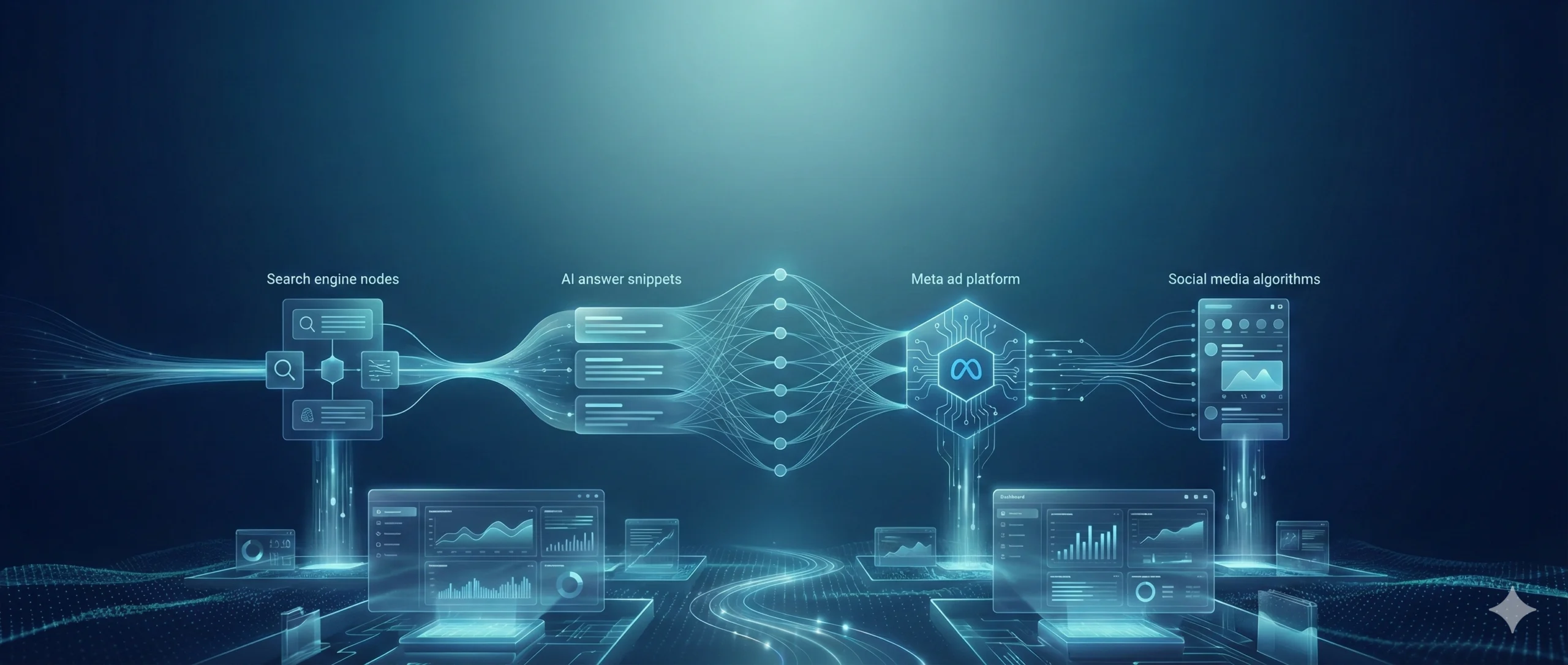
    Andromeda is Meta’s advanced AI-powered ad delivery system. It replaced traditional interest-based targeting with real-time behavioral matching. Instead of advertisers defining exactly who should see ads, Meta’s AI now decides which users are most likely to respond — based primarily on creative performance signals.

    This means ads are evaluated before they even enter the auction.


    How it impacted advertisers

    The immediate effects were noticeable:
    • Narrow interest targeting lost effectiveness
    • Creative quality became the biggest performance driver
    • Costs fluctuated more than before
    • Campaigns required more testing and iteration

    Advertisers who relied heavily on audience hacks struggled. Those who invested in strong creative systems adapted faster.


    Current status

    By the end of 2025, Andromeda is fully deployed across Facebook and Instagram. Manual targeting still exists, but its influence has reduced significantly.

    At Scribo Media, Meta Ads strategy now starts with creative research, messaging angles, and visual testing — not audience stacking.


    What digital marketers need to do now

    • Embrace broad targeting
    • Create multiple creative variations
    • Focus on hooks, clarity, and messaging
    • Ensure clean conversion tracking and data quality

    Meta Ads success now depends on feeding the algorithm the right creative signals.


    Future outlook

    Meta Ads will continue evolving into a creative-first, AI-optimized marketplace. Advertisers who treat ads as systems — not one-off campaigns — will consistently outperform those chasing short-term hacks.

    4. How AI Changed Content Marketing in 2025 (And Why Human Strategy Still Wins)

    Quick Summary – AI in Content Marketing

    AI tools became mainstream, increasing content volume but reducing average quality. Brands that rely only on AI struggle, while hybrid human-led strategies perform best. Strategy and thinking now matter more than speed.

    2025 was the year AI officially became unavoidable in content marketing. What started as experimentation in previous years turned into daily usage across teams, agencies, and solo creators.

    Yet, despite fears, AI did not replace content marketers. Instead, it exposed a deeper truth: tools can generate content, but they cannot create meaning.

    At Scribo Media, 2025 was the year we redefined content workflows to combine AI speed with human strategy.

    What the update was

    AI tools became mainstream for content ideation, drafting, rewriting, optimization, and even basic research. Almost every marketer gained access to the same writing capabilities.

    This led to an explosion of content across blogs, websites, social platforms, and emails.

    How it impacted digital marketing

    Content volume skyrocketed, but average quality dropped. The internet became noisier, not better.

    Many AI-generated articles lacked:
    • Original insights
    • First-hand experience
    • Brand voice
    • Strategic depth

    Search engines and audiences quickly adapted. Generic AI-written content struggled to rank, engage, or convert.

    The differentiator was no longer “who can write faster,” but who can think better.

    Current status (end of 2025)

    AI-only content underperforms consistently. Content that blends AI efficiency with human thinking performs best.

    At Scribo Media, AI is used for:
    • Speeding up research
    • Structuring drafts
    • Improving clarity

    Humans remain responsible for:
    • Strategy
    • Messaging
    • Positioning
    • Final quality control

    What digital marketers need to do now

    • Use AI as a productivity tool, not a replacement
    • Add real examples, opinions, and experiences
    • Build recognizable brand voice
    • Focus on clarity and usefulness, not volume

    The future belongs to marketers who direct AI, not depend on it blindly.

    Future outlook

    Hybrid content models will dominate. AI will handle execution; humans will handle thinking. Brands that rely solely on automation will fade into sameness.

    5. AI Search Is the New Discovery Channel: What Marketers Learned in 2025

    Quick Summary – AI Search as Discovery

    AI tools emerged as discovery platforms, shifting visibility from links to mentions and citations. Authority, accuracy, and structured content now determine whether brands appear in AI-driven discovery.

    For decades, search meant Google. In 2025, that definition quietly changed.

    Users increasingly began discovering information through AI assistants, conversational tools, and generative platforms — without ever opening a browser.

    This marked the rise of AI-driven discovery.

    What the update was

    AI tools evolved from productivity assistants into information gateways. Users started asking them questions they previously typed into Google — from research queries to buying decisions.

    Instead of browsing multiple websites, users trusted AI to summarize, compare, and explain.

    How it impacted digital marketing

    Visibility shifted from links to mentions and citations. Being referenced by AI systems became as important as ranking on Google.

    Traditional SEO signals like backlinks mattered less in isolation. What mattered more was:
    • Authority
    • Accuracy
    • Topical depth
    • Structured explanations

    Brands without strong informational content were invisible in AI-driven discovery.

    Current status (end of 2025)

    AI search is now mainstream for research, learning, and decision support.

    At Scribo Media, content strategies are now designed not just for Google indexing, but for AI understanding and citation.

    What digital marketers need to do now

    • Build authoritative content hubs
    • Cover topics comprehensively
    • Ensure factual accuracy and consistency
    • Optimize content for AI citations, not just rankings

    If your content cannot be summarized clearly, AI systems will ignore it.

    Future outlook

    AI assistants will become long-term knowledge gatekeepers. Brands that establish authority early will dominate AI-driven discovery in the coming years.

    6. LinkedIn Algorithm Changes in 2025: Why Authority Beat Virality

    Quick Summary – LinkedIn Algorithm Changes

    LinkedIn began rewarding first-hand experience and professional insights over generic motivational content. Authority-driven, problem-solving posts now outperform viral formats.

    LinkedIn didn’t announce a dramatic algorithm update in 2025 — but the platform quietly transformed how reach and engagement work.

    The result was clear: authority replaced virality.

    What the update was

    LinkedIn began prioritizing content that demonstrated:
    • First-hand experience
    • Professional insight
    • Educational value
    • Problem-solving depth

    Generic motivational posts, recycled quotes, and shallow opinions gradually lost reach.

    How it impacted creators and brands

    Creators who relied on trendy formats or engagement bait saw declining impressions. Professionals who shared real experiences, lessons, and expertise gained consistent visibility.

    The platform rewarded credibility over entertainment.

    At Scribo Media, this reinforced our belief that thought leadership must be earned, not manufactured.

    Current status (end of 2025)

    Authority-driven content now dominates LinkedIn feeds. Posts that teach, explain, or challenge thinking perform best over time.

    One-off viral posts matter less than consistent value delivery.

    What digital marketers need to do now

    • Share real experiences and lessons
    • Focus on niche expertise
    • Write problem-first content
    • Build consistency over virality

    LinkedIn now favors professionals who help others think better — not just feel motivated.

    Future outlook

    LinkedIn will continue evolving into a professional knowledge platform. Credibility, clarity, and depth will outperform trends and shortcuts.

    7. Short-Form Video in 2025: Why Quality Finally Beat Quantity

    Quick Summary – Short-Form Video

    Short-form video matured in 2025. Algorithms prioritized retention and clarity over volume. Low-effort posting declined, while scripted, value-driven videos gained reach.

    For years, short-form video rewarded speed. Post daily. Follow trends. Hook fast. Repeat.
    In 2025, that formula finally broke.

    Short-form video matured — and the platforms made one thing clear: quality now matters more than quantity.

    What the update was

    Platforms like Instagram Reels and YouTube Shorts refined their algorithms to prioritize viewer retention, completion rate, and clarity instead of just initial hooks or posting frequency.

    Videos were no longer pushed just because they grabbed attention in the first two seconds. They had to hold attention.

    This marked the end of the “low-effort daily posting” era.

    How it impacted digital marketing

    Many creators saw sudden drops in reach despite posting consistently. Meanwhile, well-scripted, informative, and clearly structured videos began outperforming higher-volume accounts.

    Trends alone stopped working.
    Relevance, pacing, and value took over.

    Brands that treated short-form video like quick filler content struggled. Brands that treated it like micro-education or storytelling adapted faster.

    Current status (end of 2025)

    Short-form video is now performance-driven. Algorithms favor videos that:
    • Deliver clear value
    • Maintain retention beyond the hook
    • End without abrupt drop-offs

    At Scribo Media, short-form strategy now starts with scripting and intent — not trends.

    What digital marketers need to do now

    • Improve scripting, not just hooks
    • Focus on one clear idea per video
    • Optimize pacing and clarity
    • Stop posting for volume alone

    Short-form video must now earn its reach.

    Future outlook

    Short-form video will continue blending with long-form depth. The creators and brands that win will be those who teach, explain, or guide — quickly and clearly.

    8. Performance Marketing in 2025: Attribution Got Harder, Strategy Got Smarter

    Quick Summary – Performance Marketing

    Privacy changes and AI optimization made attribution less precise. Marketers shifted toward blended metrics, incrementality, and business outcomes instead of chasing perfect tracking.

    If 2025 felt frustrating for performance marketers, it wasn’t because ads stopped working — it was because measurement changed.

    Attribution became less certain, forcing marketers to rethink how success is defined.

    What the update was

    Privacy regulations, cookie limitations, and AI-driven ad optimization reduced deterministic tracking. Platforms increasingly relied on modeled conversions and probabilistic attribution.

    Exact “who clicked what” answersT became harder to trace.

    How it impacted digital marketing

    Many advertisers lost confidence in dashboards. ROAS fluctuated. Conversion paths became unclear.

    But something important happened: marketers stopped obsessing over single-channel attribution and started focusing on business outcomes.

    Blended metrics, incrementality testing, and holistic performance analysis gained importance.

    Current status (end of 2025)

    Performance marketing still works — but it must be interpreted differently.

    At Scribo Media, performance evaluation now combines:
    • Platform data
    • Business revenue trends
    • Lead quality
    • Incremental lift

    Exact attribution is less important than directional accuracy.

    What digital marketers need to do now

    • Focus on incrementality, not perfection
    • Use first-party data aggressively
    • Measure business impact, not just platform metrics
    • Accept modeled data as part of reality

    Performance marketing is no longer about precision — it’s about decision-making clarity.

    Future outlook

    Attribution will remain probabilistic. Marketers who adapt their mindset will outperform those chasing perfect tracking that no longer exists.

    9. AISO in 2025: Why SEO Expanded Beyond Google

    Quick Summary – AISO

    SEO expanded beyond Google, giving rise to AI Search Optimization. Content now needs to be optimized for AI understanding, summarization, and citation across multiple discovery surfaces.

    2025 introduced a shift many marketers didn’t see coming: SEO expanded beyond Google.
    This gave rise to a new discipline — AI Search Optimization (AISO).

    What the update was

    As AI tools became discovery platforms, content needed to be optimized not just for crawling and ranking, but for AI understanding, summarization, and citation.

    Search visibility now includes:
    • AI-generated answers
    • Summaries
    • Knowledge references
    • Conversational recommendations

    This required a different approach to content creation.

    How it impacted digital marketing

    Brands with shallow or fragmented content struggled to appear in AI responses. Brands with structured, entity-rich, authoritative content gained visibility — even without traditional rankings.

    SEO stopped being Google-only. Visibility became multi-surface.

    At Scribo Media, this shift formalized AISO as part of every SEO strategy.

    Current status (end of 2025)

    AISO is still emerging, but its importance is undeniable. Early adopters already benefit from AI visibility and brand mentions.

    Content that is clear, factual, and comprehensive performs best across AI-driven platforms.

    What digital marketers need to do now

    • Structure content for AI comprehension
    • Build entity-rich topic clusters
    • Write clear definitions and explanations
    • Focus on authority and accuracy

    If AI cannot understand your content, it cannot recommend it.

    Future outlook

    AISO will soon be as standard as SEO. Brands that start optimizing for AI discovery now will dominate future search landscapes.

    Conclusion

    The biggest lesson from 2025 is simple but uncomfortable: control has shifted. Algorithms now decide visibility, AI decides delivery, and audiences decide trust.

    The marketers who struggled were those chasing shortcuts. The ones who grew focused on clarity, credibility, and long-term thinking.

    As we move into 2026, success in digital marketing will belong to those who build authority, structure knowledge properly, and adapt early.

    At Scribo Media, these shifts are no longer “trends” — they are the foundation of how modern marketing works.


    Frequently Asked Questions

    1. What were the biggest digital marketing changes in 2025?

    The biggest digital marketing changes in 2025 were Google shifting to answer-based search, the expansion of generative search (SGE), Meta’s Andromeda ads update, widespread AI use in content creation, LinkedIn’s authority-focused algorithm, short-form video maturity, attribution challenges, and the rise of AI Search Optimization (AISO).

    2. Why did SEO change so much in 2025?

    SEO changed in 2025 because search engines began prioritizing understanding and answers over rankings and clicks. Google now focuses on entity clarity, experience, trust, and structured explanations, making keyword-focused SEO less effective than authority-driven, helpful content.

    3. Is SEO still relevant after Google AI and SGE updates?

    Yes, SEO is still relevant after Google’s AI and SGE updates, but its role has evolved. SEO now focuses on visibility, credibility, and inclusion in AI-generated answers rather than only driving clicks from traditional search results.

    4. What is Meta Andromeda and why did Facebook ads performance change?

    Meta Andromeda is an AI-powered ad delivery system that prioritizes creative performance over manual audience targeting. Facebook and Instagram ad performance changed because narrow targeting lost effectiveness while ad creatives became the main factor influencing delivery and results.

    5. Does interest targeting still work on Facebook and Instagram ads?

    Interest targeting still exists, but it is far less impactful than before. Meta’s AI now relies more on user behavior and creative signals, which is why broad targeting combined with strong creatives performs better than detailed audience layering.

    6. How did AI affect content marketing in 2025?

    AI affected content marketing in 2025 by increasing production speed while lowering average content quality. Brands using AI without human strategy struggled, while hybrid approaches combining AI efficiency with human expertise performed better in search and engagement.

    7. Are AI tools replacing content writers and marketers?

    No, AI tools are not replacing content writers and marketers. AI handles drafting and optimization tasks, but humans are still required for strategy, originality, experience, and brand voice, which remain critical for performance and trust.

    8. How is AI changing search and content discovery?

    AI is changing search by acting as a discovery platform itself. Users increasingly rely on AI assistants for answers, summaries, and recommendations, shifting visibility from website links to brand mentions, citations, and authoritative content.

    9. Why did LinkedIn engagement patterns change in 2025?

    LinkedIn engagement changed because the algorithm began prioritizing first-hand experience, professional insights, and educational content. Generic motivational posts lost reach, while authority-driven and problem-solving content gained consistent visibility.

    10. Is short-form video still effective after 2025?

    Yes, short-form video is still effective, but quality now matters more than quantity. Algorithms prioritize retention, clarity, and value delivery, meaning scripted, focused videos outperform frequent low-effort posts.

    11. Why has performance marketing attribution become harder?

    Performance marketing attribution became harder due to privacy regulations, reduced tracking, and AI-driven optimization. Platforms rely more on modeled data, forcing marketers to focus on blended metrics and business outcomes instead of exact user paths.

    12. What is AISO and why is it important?

    AISO, or AI Search Optimization, is the practice of optimizing content for AI understanding and citation. It is important because visibility now extends beyond Google to AI-generated answers, summaries, and recommendations across multiple platforms.