
April 10, 2026/
Learn how to write SEO content for real estate listings that rank on Google. Optimize descriptions, fix duplicate content, and...

Finding clients is the lifeblood of any freelancing business or agency. Whether you’re running a digital marketing agency like Scribo Media or offering any other service, this comprehensive guide reveals 21 practical, effective methods to discover potential clients, extract their contact information, and send outreach that converts. From leveraging LinkedIn and cold email to tapping into niche communities and partnerships, you’ll learn exactly where to find clients, how to reach them, and best practices that get results.
Finding clients online requires a strategic mix of direct outreach, visibility building, and relationship development. The most effective approaches combine multiple channels and focus on being where your ideal clients already spend their time. Let’s dive into each method with actionable steps you can implement today.
Quick Summary: LinkedIn is a goldmine for B2B client acquisition, offering advanced search capabilities, professional networking, and direct messaging opportunities that make it ideal for agencies like Scribo Media to connect with decision-makers.
LinkedIn outreach involves using the platform’s professional network to identify, connect with, and engage potential clients. It’s one of the most effective B2B client acquisition strategies because you’re reaching people in a professional context where they expect business conversations.
Start by optimizing your LinkedIn profile to showcase your expertise. Your headline should clearly state what you do and for whom. For Scribo Media, that might be “Helping B2B Brands Dominate Search Rankings with SEO-Optimized Content & AI Citations” or “Growing SaaS Companies Organically Through Strategic Content Marketing.” Fill out your experience section with results-focused accomplishments, and gather recommendations from past clients.
Next, use LinkedIn’s search filters to find your ideal clients. You can search by job title, industry, company size, and location. Sales Navigator (LinkedIn’s premium tool) offers even more advanced filtering options.
Use LinkedIn’s search with specific parameters. For example, if Scribo Media targets B2B SaaS companies, search for “Content Marketing Manager,” “Head of Marketing,” or “VP of Growth” at companies with 50-500 employees. Export this list manually or use tools like LinkedIn Sales Navigator, Phantombuster, or Dripify to build your prospect list.
Look for engagement signals like recent posts, job changes, or company announcements that indicate they might need your services.
Navigate to LinkedIn’s search bar and use these filters: job title (Content Marketing Manager, CMO, Head of Growth, Marketing Director), industry (SaaS, B2B Technology, Professional Services, Healthcare), company size (based on your ideal client profile), and location (if you serve specific regions).
Join relevant LinkedIn groups where your prospects gather. For content marketing agencies, groups focused on content strategy, SEO, B2B marketing, SaaS growth, or specific industries can be valuable.
Don’t send a connection request with a sales pitch. Instead, send a personalized connection note mentioning something specific about their profile or company. Keep it under 200 characters.
After they accept, wait 2-3 days before sending a value-first message. Reference their recent post, congratulate them on a company milestone, or share a relevant insight. Only then introduce what you do and how it relates to their situation.
Example: “Hi Sarah, saw your post about scaling organic traffic for your SaaS platform. We recently helped a similar B2B company increase their organic search traffic by 340% in 6 months while securing AI citations from ChatGPT and Perplexity. Would you be open to a quick chat about your current content strategy?”
Quick Summary: Cold email remains one of the highest ROI client acquisition channels when done correctly, allowing you to reach decision-makers directly with personalized, value-driven messages at scale.
Cold email outreach involves sending targeted, personalized emails to potential clients who haven’t interacted with your business before. Unlike spam, effective cold email provides genuine value and relevance to the recipient.
Build a targeted list of prospects, craft personalized email sequences, and use email automation tools to send and track your campaigns. The key is to make each email feel personal, not mass-produced.
Set up a dedicated domain for cold outreach (like outreach.scribomedia.com) to protect your main domain’s deliverability. Warm up your email accounts gradually using tools like Lemwarm or Mailreach.
Use tools like Apollo.io, Hunter.io, or Snov.io to find email addresses for your target prospects. You can search by job title, company, industry, and other parameters.
Alternatively, manually research companies that fit your ideal client profile and use email finding tools to locate the decision-maker’s contact information.
For Scribo Media targeting B2B SaaS or professional services companies, you might search for “Head of Marketing at B2B SaaS companies with $5M-$50M revenue” or “Content Marketing Manager at technology companies.”
Start with company databases like Apollo, ZoomInfo, or Crunchbase to identify companies matching your criteria. Then use email finders to get contact information.
Visit company websites and use patterns like firstname@company.com or firstname.lastname@company.com, verifying with Hunter.io or NeverBounce.
LinkedIn can also be a starting point—identify prospects there, then find their emails using the tools mentioned above.
Craft a multi-touch sequence (5-7 emails over 2-3 weeks). Your first email should be short, personalized, and focused on one specific pain point.
Structure: Personalized opener (mention something specific about their company) → Identify a problem they likely have → Hint at your solution → Soft CTA
Example: “Hi Marcus,
Noticed [Company Name] published a great piece on industry trends last month—the insights were spot-on.
Most B2B companies we work with struggle to turn content into consistent organic traffic. They publish regularly but rankings plateau and AI tools like ChatGPT never cite them.
We’ve developed a framework that helped brands like [Similar Company] increase organic traffic 290% while securing 50+ AI citations monthly from ChatGPT, Perplexity, and Gemini.
Worth a 15-minute conversation?”
Quick Summary: While traditionally seen as B2C, Instagram offers powerful B2B opportunities through Stories, Reels, and DM outreach, especially for visually-driven services or when targeting younger decision-makers and entrepreneurs.
Instagram outreach involves identifying potential clients on the platform, engaging with their content, and initiating conversations through direct messages. It works particularly well for creative agencies, personal brands, and companies targeting entrepreneurs or modern businesses.
Create a professional Instagram profile showcasing your work, results, and expertise. Post valuable content regularly (tips, case studies, industry insights) to build credibility.
Identify potential clients by searching relevant hashtags, checking competitors’ followers, and exploring location tags if you serve local businesses.
Search hashtags related to your niche. For Scribo Media, try #contentmarketing, #SEOtips, #B2Bmarketing, #contentcreation, #organicgrowth, #digitalmarketingstrategy, or industry-specific tags like #SaaSmarketing or #B2Bcontent.
Check the followers and following lists of complementary businesses or competitors. Look for accounts with good engagement that match your ideal client profile.
Use Instagram’s search to find local businesses if you serve a specific geographic area.
Browse posts under relevant hashtags and engage with account owners who are actively posting about growing their business. Check their bios for business indicators (website links, company names).
Explore Instagram Stories—businesses often share behind-the-scenes content or challenges they’re facing, giving you conversation starters.
Look at “Suggested for You” accounts that Instagram recommends based on accounts you’ve already identified as potential clients.
Never lead with a sales pitch in the first DM. Start by genuinely engaging with their content for a week—like posts, comment thoughtfully on 2-3 posts, and view their Stories.
When you send a DM, reference specific content they’ve posted. Make it conversational and value-focused.
Example: “Hey! Loved your recent post about building thought leadership in the B2B space. Your insights on LinkedIn content were really valuable! We’ve helped similar companies amplify their content strategy—one client went from 10K monthly organic visits to 85K in 8 months while getting cited by ChatGPT regularly. Would love to share some insights if you’re ever looking to scale your organic presence 🚀”
Quick Summary: Facebook Groups are communities where your ideal clients gather to ask questions, share challenges, and seek recommendations—making them perfect for relationship-building and establishing authority before pitching your services.
Facebook Group networking involves joining communities where your target clients congregate, providing valuable advice, and building relationships that naturally lead to client opportunities.
Search for groups where your ideal clients spend time. For Scribo Media, this might include B2B marketing groups, content marketing communities, SaaS founder forums, SEO professional groups, or industry-specific associations.
Join 10-15 active groups and spend time understanding the community culture before posting or messaging members. Read the rules carefully—many groups prohibit direct solicitation.
Look for members posting about challenges your service solves. For example, posts like “struggling to get profitable Facebook ads” or “need help scaling my marketing” are clear signals.
Check the members list and identify people based on their profiles, job titles, and businesses they list. You can also see who’s most active and engaged.
Use Facebook’s search bar to find groups. Search terms like “content marketing professionals,” “B2B marketers,” “SaaS growth,” “SEO strategies,” “content strategy,” or industry-specific groups like “fintech marketing” or “healthcare content marketers.”
Once in groups, monitor the “New Member” section and posts tagged with questions or help requests.
Look at who’s commenting on posts with sophisticated questions or sharing their experiences—these are often the more serious business owners.
First, establish yourself as a helpful member by answering questions and providing value without pitching. Do this for 2-3 weeks.
When you do reach out via DM, reference a specific comment or post they made.
Example: “Hi Jennifer! Saw your comment in the B2B Content Marketing group about struggling to rank for competitive keywords. That’s super common when scaling content production. We actually created a framework for this exact issue that helped one of our clients achieve 15 first-page rankings in 90 days while getting cited by AI tools 40+ times monthly. Happy to share a few tips if you’d like!”
Quick Summary: Twitter’s real-time nature and conversation-focused platform make it ideal for engaging with potential clients, identifying those with active problems, and building authority through thought leadership.
Twitter outreach involves identifying potential clients through their tweets, engaging in conversations, and providing value that leads to business relationships. It’s particularly effective because you can see people’s challenges in real-time.
Build a professional Twitter profile optimizing your bio with a clear value proposition. Tweet regularly about your expertise, insights, and industry trends.
Use Twitter’s advanced search to find people tweeting about problems you solve. Monitor specific keywords, hashtags, and conversations relevant to your niche.
Use Twitter Advanced Search to find tweets containing keywords like “need help with SEO,” “looking for content marketing agency,” “struggling with organic traffic,” “content strategy help,” or industry-specific pain points related to content and search visibility.
Search for hashtags like #ContentMarketing, #SEOhelp, #B2Bmarketing, #ContentStrategy, or pain-point hashtags related to organic growth challenges.
Create Twitter Lists of potential clients to monitor their activity without following everyone.
Search tweets with phrases like “can anyone recommend,” “looking for help with,” “need a content strategist,” “SEO expert needed,” or “[problem keyword] + frustrated/struggling/help.”
For Scribo Media: Search “content marketing help,” “SEO strategy struggling,” “organic traffic declining,” “need content writer,” “AI citations,” “ChatGPT not citing us,” etc.
Check who’s following industry influencers, competitors, or complementary services in your niche.
Monitor hashtags used by your target industry during specific events, product launches, or busy seasons.
Start by replying to their tweets with genuine, helpful insights. Don’t pitch immediately.
After engaging 2-3 times, send a DM referencing your interaction.
Example: “Hey Alex! Saw your tweet about organic traffic challenges. The issue you described—publishing consistently but not ranking—is usually caused by topical authority gaps and AI optimization. We’ve solved this for 30+ B2B brands. I’d be happy to share a quick framework that might help. Want me to send it over?”
Quick Summary: Reddit’s niche communities (subreddits) contain highly targeted audiences, but require a value-first, non-promotional approach to successfully find clients without facing community backlash or bans.
Reddit engagement means participating authentically in relevant subreddits, providing genuine help, and building trust before ever mentioning your services. Reddit users are fiercely anti-advertising, so the approach must be subtle and value-driven.
Create a legitimate Reddit account and spend time building karma (Reddit’s credibility score) by contributing to various subreddits before joining your target communities.
Find subreddits where your ideal clients gather, read the rules carefully, and observe the community culture for a week before posting.
Look for posts where people are asking for help with problems you solve. Comments like “Can anyone recommend…” or “I’m struggling with…” are opportunities.
Check user post histories to verify they’re legitimate business owners before investing time.
Note usernames of active members who frequently discuss topics related to your service.
Search for subreddits relevant to your niche. For Scribo Media: r/content_marketing, r/SEO, r/bigseo, r/marketing, r/Entrepreneur, r/smallbusiness, r/SaaS, r/B2BMarketing, and industry-specific subreddits.
Use the search function within subreddits to find recent posts about specific problems.
Sort by “New” to catch questions early before they’re buried.
Respond to posts publicly first with detailed, helpful answers. Don’t mention your service unless directly asked.
If someone appreciates your help, you can DM them offering to share more detailed information or resources.
Example: “Hey! Glad that tip about keyword clustering helped. I actually created a full breakdown of our topical authority framework that’s helped 20+ B2B brands dominate their niche in search results and get regular AI citations. Happy to share it if you’d find it useful—no strings attached.”
Learn how to write SEO content for real estate listings that rank on Google. Optimize descriptions, fix duplicate content, and...
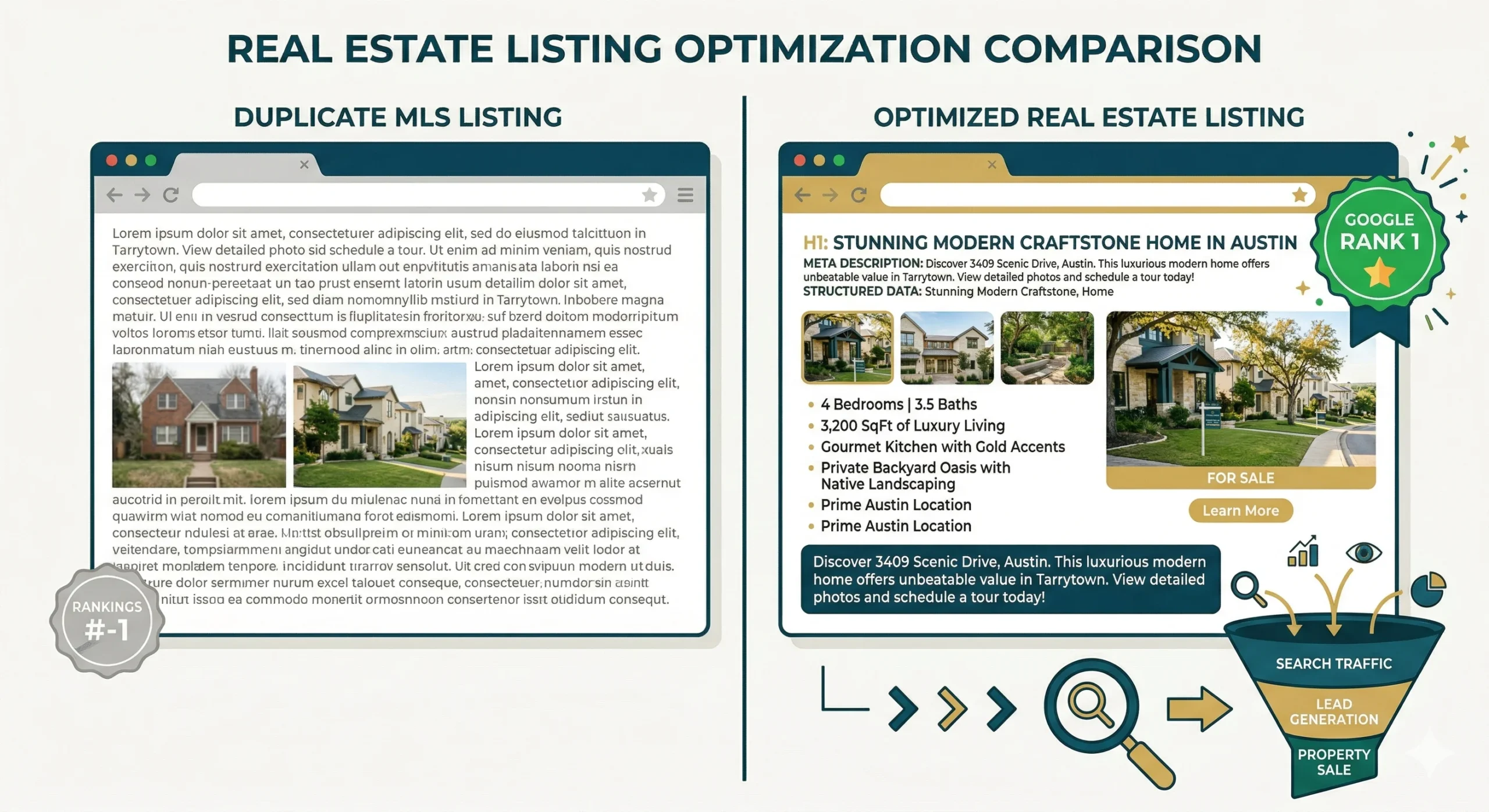
Learn how to write SEO content for real estate listings that rank on Google. Optimize descriptions, fix duplicate content, and...
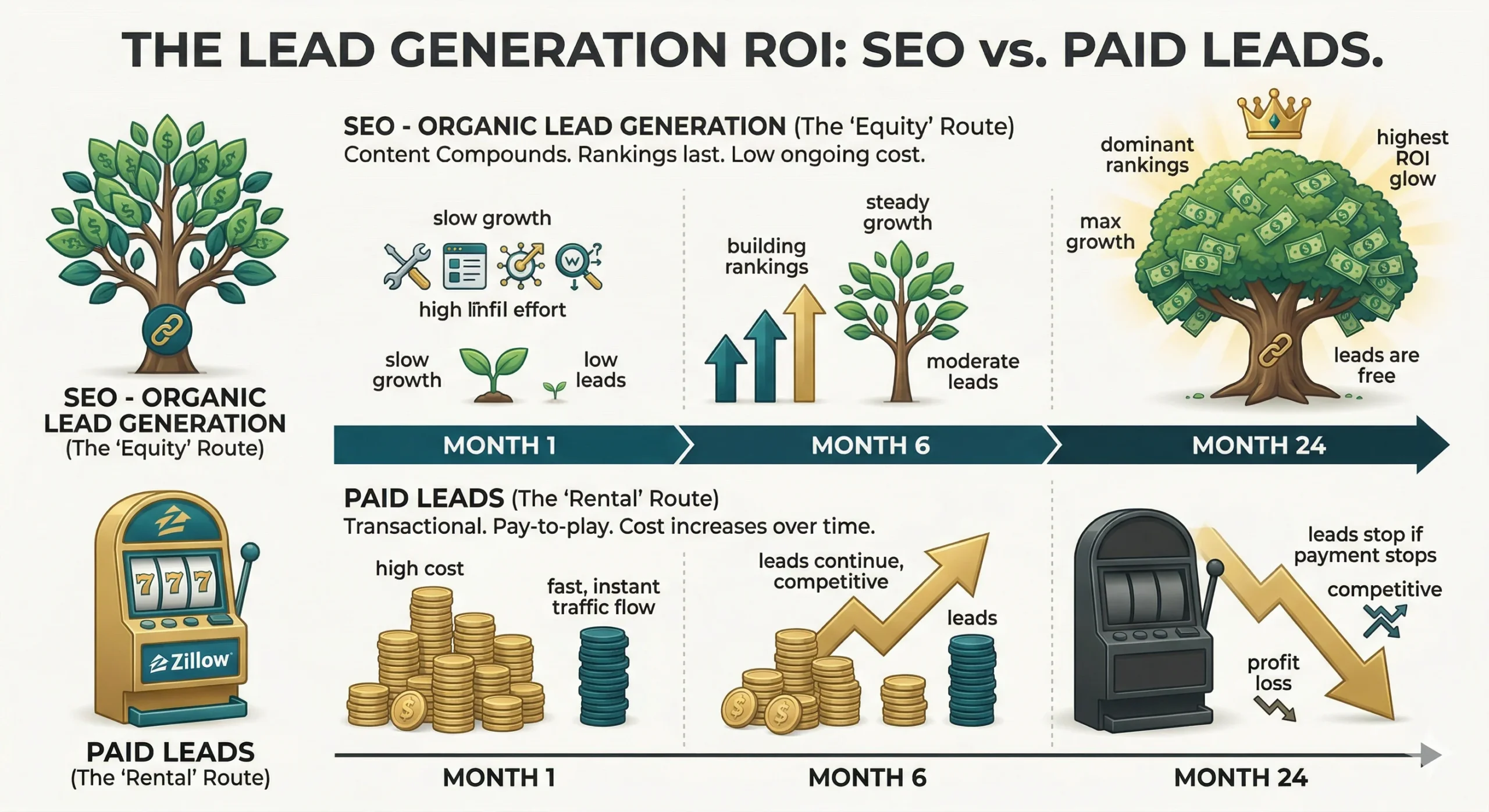
Discover proven real estate lead generation strategies in the USA. Learn how to use SEO, content, and funnels to get...
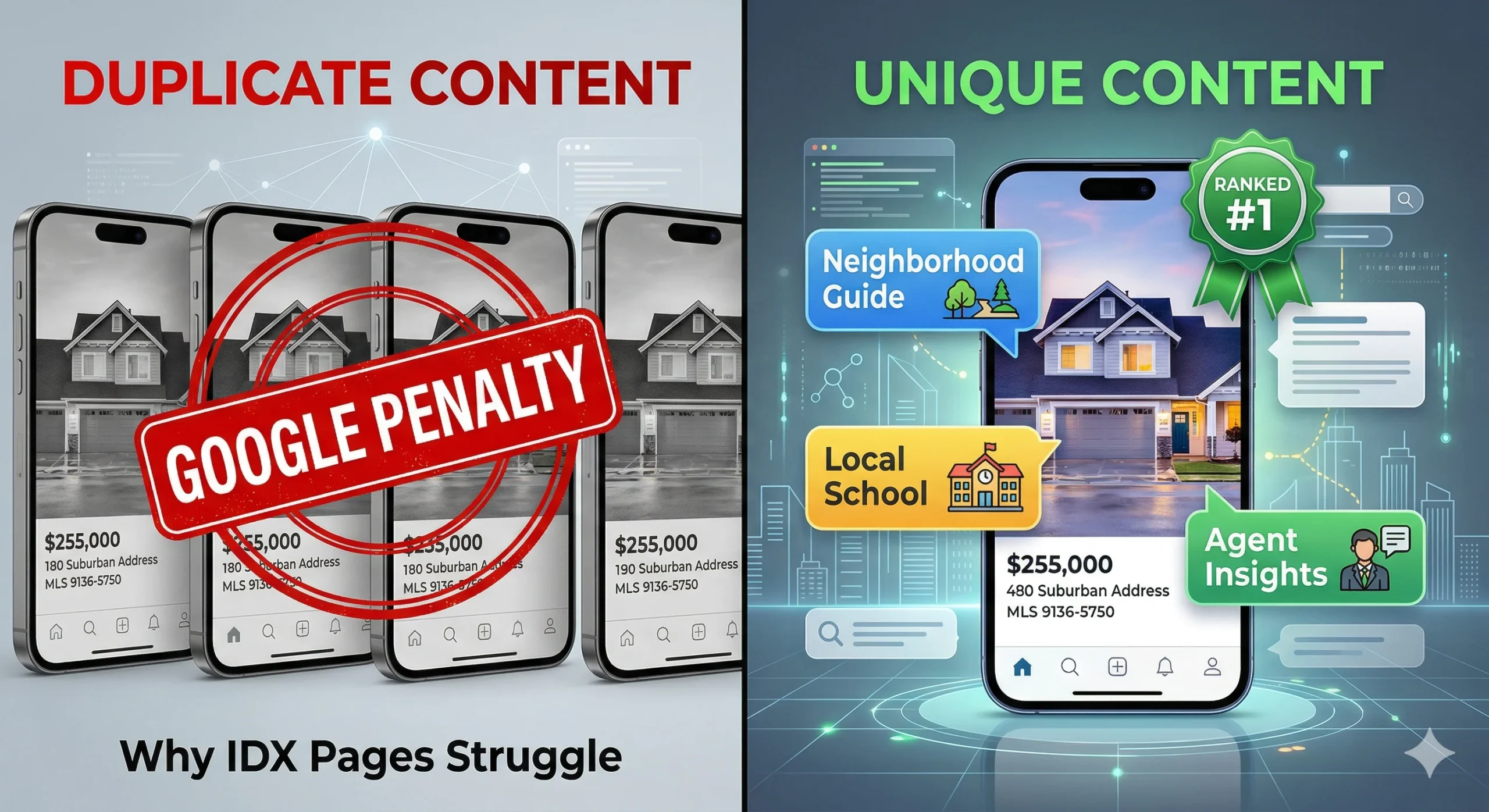
Learn how to optimize IDX websites for SEO, fix duplicate content issues, and rank real estate listings on Google to...

Learn how realtors in the USA generate consistent leads using SEO instead of Zillow. Build a long-term organic lead system...
Quick Summary: Google Maps and local search are goldmines for finding businesses in specific geographic areas or industries, providing easy access to contact information and allowing for hyper-targeted outreach.
Google Maps prospecting involves using Google’s business directory to identify potential clients based on location, industry, and business type, then reaching out with localized, relevant messaging.
Search for your target business type in specific locations using Google Maps. For example, “B2B technology companies in Austin” or “SaaS startups in San Francisco” or “professional services firms in Boston.”
Use Google Maps scraping tools (like Outscraper or Google Maps Scraper extensions) to export lists of businesses with their contact information.
Open Google Maps and search for your target business type plus location. Click through each listing to gather business names, phone numbers, websites, and addresses.
Use extraction tools to automate this process and build spreadsheets with hundreds of prospects quickly.
Visit their websites to find email addresses or use tools like Hunter.io to locate the owner/decision-maker’s contact info.
Type searches like: “[industry] + [city]”, “marketing agencies near me”, “e-commerce businesses in [location]”, or specific business categories.
For B2B: Search for businesses that serve your target client. If you want to reach restaurants, search “restaurant suppliers” to find companies selling to them.
Use the filters to narrow by rating, hours, and other parameters to find more established businesses.
Call directly or send localized emails referencing their location and specific business details you observed.
Example email: “Hi Maria, I came across [Business Name] while researching innovative fintech companies in Denver. Your focus on financial education for millennials is impressive. Many B2B fintech companies we work with struggle to rank for competitive search terms and get discovered organically. We’ve helped companies like [local competitor] increase organic traffic by 280% through strategic SEO content. Would you be open to a quick call to discuss how we could help [Business Name] grow its organic visibility?”
Quick Summary: While competitive, freelance platforms like Upwork, Fiverr Pro, and Toptal can be sources of quality clients if you position yourself as a premium provider, craft compelling proposals, and build a strong profile with testimonials.
Freelance platforms connect service providers with clients actively searching for help. Instead of cold outreach, you’re responding to warm leads who’ve already identified they need your service.
Create a detailed profile showcasing your expertise, results, and unique value proposition. Include a professional photo, portfolio pieces, and specific outcomes you’ve delivered.
Browse jobs daily and submit highly customized proposals that address the client’s specific needs rather than generic pitches.
Search for projects matching your service offering using platform filters. On Upwork, use filters for budget, experience level required, and posting date.
Look for clients who’ve spent significant money on the platform (indicated by their spending history), have good reviews, and are hiring frequently.
Save searches and set up alerts for specific keywords related to your services.
Upwork, Fiverr Pro, Toptal, Freelancer, PeoplePerHour, and Guru are the main platforms.
For Scribo Media, search terms like: “SEO content writing,” “content marketing strategy,” “blog writing,” “SEO optimization,” “content strategy,” “organic growth,” “AI content optimization.”
Filter for higher budgets ($5,000+) to avoid tire-kickers and find serious clients.
On these platforms, “outreach” is your proposal. Make it specific to their project description.
Structure: Address them by name → Reference specific details from their posting → Explain why you’re uniquely qualified → Share relevant results → Ask a clarifying question → Include clear next steps
Example: “Hi Jennifer, Your content marketing project resonated with me, especially the challenge of creating content that actually ranks and drives organic traffic. We recently helped a similar B2B SaaS company in the project management niche increase organic traffic from 8K to 45K monthly visits in 5 months while securing 60+ AI citations from ChatGPT and Perplexity. I noticed you mentioned struggling with keyword research and topical authority—this is actually an area where we’ve developed specialized frameworks. Quick question: Are you currently tracking your AI citation rate across different LLMs? I’d love to discuss how we could replicate similar results for your brand.”
Quick Summary: Niche forums and online communities gather highly targeted audiences discussing specific challenges, making them perfect for establishing expertise and finding clients with active problems you can solve.
Forum prospecting involves participating in industry-specific online communities where your target clients ask questions, share challenges, and seek recommendations, allowing you to demonstrate expertise and build relationships organically.
Identify forums relevant to your target industry. Create a profile that clearly communicates your expertise without being overly promotional.
Spend time reading existing threads to understand the community culture, common questions, and what type of content is valued.
Look for “looking for recommendations” threads, people posting about specific challenges, or discussions about hiring service providers.
Check member profiles and signatures for business information. Many forums allow members to include website links or business descriptions.
Note frequent posters who seem to be running growing businesses—they’re often the best potential clients.
For content marketing: GrowthHackers, Indie Hackers, Marketing Profs Community, Content Marketing Institute forums, Moz Community.
For general business content: SaaS-specific forums, industry association communities, niche professional forums.
Use Google searches like “[industry] + forum” or “[target client type] + community” to discover active forums.
Establish credibility by answering questions helpfully over several weeks. Build a reputation as a knowledgeable resource.
When someone posts a problem you can solve, provide a detailed public response without pitching. If appropriate, add “Happy to discuss this further if you need more detailed guidance” at the end.
If they respond positively, continue the conversation via private message with additional insights before mentioning your services.
Quick Summary: Hosting webinars and virtual events positions you as an authority, attracts pre-qualified leads who are interested in your expertise, and creates natural opportunities to convert attendees into clients through value-first education.
Webinar lead generation involves hosting educational online events that teach your target audience something valuable, collecting registrants’ contact information, and following up with attendees to convert them into clients.
Choose a specific, valuable topic that solves a pressing problem for your ideal client. Create a presentation that delivers genuine insights, frameworks, or strategies they can implement. Examples: “How to Get Your Content Cited by ChatGPT & Other AI Tools,” “The 90-Day SEO Content System for B2B Growth,” “Building Topical Authority That Actually Ranks.”
Promote your webinar across your existing channels (email list, social media, website) and through paid advertising if budget allows.
Every registrant provides their email, name, and often company information when signing up. These become warm leads for follow-up.
During the webinar, use polls and Q&A to identify who has the most pressing needs or is furthest along in their buying journey.
Track attendee engagement—who stayed for the whole session, who asked questions, who downloaded resources—to prioritize follow-up.
Promote on LinkedIn, Facebook Groups, Twitter, industry forums, and relevant online communities.
Partner with complementary businesses to co-host or promote to each other’s audiences.
Use platforms like WebinarJam, Zoom, or Demio which include built-in registration and CRM features.
List your webinar on event directories like Eventbrite, Meetup, or industry-specific event calendars.
Follow up differently based on attendance: attended vs. registered but didn’t show.
For attendees: “Hi Sarah, thanks for joining yesterday’s webinar on AI citations! I noticed your question about optimizing for ChatGPT’s training data. I actually have a framework we use with clients that addresses this specifically—it’s helped brands get cited 40+ times monthly. Would you be open to a 15-minute call to discuss your current content challenges?”
For no-shows: “Hi Michael, sorry we missed you at the webinar. I’ve recorded it and included the slides. The AI citation framework we covered has helped B2B brands increase their visibility in LLM responses by 600%. Would love to hear about your current content strategy and see if there’s a fit to work together.”
Quick Summary: Content marketing and SEO create a long-term client acquisition engine by attracting potential clients who are actively searching for solutions to their problems, positioning you as the expert when they’re ready to hire.
Content marketing involves creating valuable articles, videos, or resources that rank in search engines and social media, attracting potential clients to you instead of you reaching out to them. It’s inbound marketing at its finest.
Research keywords your potential clients are searching for using tools like Ahrefs, SEMrush, or Google Keyword Planner.
Create comprehensive, helpful content that answers their questions better than existing results. For Scribo Media, this might be “How to Optimize Content for AI Citations,” “Complete Guide to Topical Authority in 2026,” or “SEO Content Strategy for B2B SaaS.”
Optimize for search engines by including keywords naturally, creating quality backlinks, and ensuring technical SEO is solid.
Include strategic calls-to-action in your content: free consultations, strategy calls, downloadable resources that require email signup, or contact forms.
Use lead magnets (checklists, templates, calculators) to capture emails from readers who aren’t ready to buy yet.
Implement chatbots or live chat to engage visitors in real-time.
They find you through Google searches, social media shares, and referrals to your content.
Distribute content on Medium, LinkedIn, industry publications, guest posting opportunities, and your own blog.
Repurpose content across YouTube, podcasts, and social media to reach clients on different platforms.
With content marketing, you typically don’t do traditional outreach. Instead, nurture leads through email sequences.
When someone downloads a resource: Send a welcome email → Educational sequence (3-5 emails with pure value) → Soft pitch email → Case study → Direct offer
Example email: “Hi Alexandra, I noticed you downloaded our SEO Content ROI Calculator last week. How did your content performance metrics look? If your organic traffic isn’t growing 15-20% month-over-month, there are usually 3 specific content gaps we can identify. I’ve helped 40+ B2B brands in similar situations. Want to hop on a quick call to discuss your specific content strategy?”
Quick Summary: Appearing as a guest on podcasts in your niche positions you as an authority, puts you in front of highly engaged audiences, and creates trust that converts listeners into clients without traditional outreach.
Podcast guesting involves being interviewed on shows your target clients listen to, sharing your expertise, and attracting potential clients who resonate with your message and approach.
Research podcasts in your industry or that serve your target client audience. Compile a list of 50+ shows that match your expertise and audience.
Craft personalized pitch emails to podcast hosts explaining why you’d be a valuable guest and what unique insights you can share.
Prepare talking points that provide genuine value while subtly demonstrating your expertise and results.
Include a clear call-to-action during the podcast (usually at the end): a free resource, consultation, or website they can visit.
Create a custom landing page for podcast listeners with a special offer or resource mentioned during the interview.
The host often links to your website and social profiles in show notes, creating inbound leads.
Search for podcasts using directories like Apple Podcasts, Spotify, Podchaser, or Listen Notes.
For Scribo Media: Search “content marketing podcast,” “SEO podcast,” “B2B marketing podcast,” “SaaS growth podcast,” “content strategy podcast.”
Look for shows with engaged audiences (check review count and ratings) rather than just focusing on download numbers.
Pitch podcast hosts via email or through their podcast website’s contact form.
Example: “Hi [Host Name], I’ve been listening to [Podcast Name] for months—your episode on AI’s impact on content marketing was incredibly insightful. I run Scribo Media, where we’ve helped 60+ B2B companies dominate organic search through strategic SEO content while securing hundreds of AI citations monthly from ChatGPT, Perplexity, and Gemini. I recently developed a framework that helped a SaaS client go from 5K to 80K monthly organic visitors in 6 months. I think your audience would find the specific strategies valuable, especially around optimizing for AI discovery. Would you be interested in having me share this on the show?”
Quick Summary: Partnerships with complementary businesses create referral networks where you send each other qualified leads, expanding your reach without competing and building trust through association with established brands.
Partnership prospecting involves building relationships with non-competing businesses that serve the same target clients, creating mutual referral agreements, and sometimes jointly marketing to combined audiences.
Identify businesses that serve your ideal client but don’t compete with your service. For Scribo Media, this might be web designers, SEO technical consultants, marketing automation agencies, PR firms, brand strategists, or business consultants serving B2B companies.
Reach out to propose collaboration: referral partnerships, co-marketing initiatives, or bundled service offerings.
Your partner refers clients to you directly when they need your specific service.
You gain access to their email list, social media audiences, and client base through co-marketing efforts.
Joint webinars, content, or events put you in front of pre-qualified audiences.
They come from your partner’s client base and network—people who already have trust established through the referring relationship.
Look for partners in your local business community, industry associations, online communities, and LinkedIn networks.
Attend industry events specifically to network with potential partners.
Reach out to potential partners with a mutually beneficial proposal.
Example: “Hi David, I run Scribo Media, a content marketing agency specializing in SEO-optimized content and AI citations for B2B brands. I’ve noticed many of the websites you design for B2B tech companies likely need ongoing content strategy and SEO support after launch. I’m looking to build a referral partnership where I send clients needing web design your way, and you send clients needing content marketing and SEO expertise mine. We could even create bundled packages for new site launches. Would you be open to discussing this?”
Quick Summary: Job boards reveal companies actively hiring for roles your service could replace or augment, giving you an opportunity to position your agency as a cost-effective, expert alternative to bringing on full-time employees.
Job board prospecting involves monitoring platforms where companies post positions relevant to your service, then reaching out to position your agency as an alternative or complement to hiring full-time staff.
Set up alerts on job boards for positions related to your service. For content marketing agencies, monitor for “Content Marketing Manager,” “SEO Specialist,” “Content Strategist,” “Head of Content,” or “Organic Growth Manager” positions.
Research the companies posting these jobs to understand their needs, growth stage, and current marketing efforts.
Every job posting includes the company name and usually the hiring manager or department. Use LinkedIn and company websites to find decision-makers’ contact information.
Look for companies posting multiple marketing roles or re-posting the same position (indicating hiring challenges).
Prioritize smaller companies ($1M-$20M revenue) that might not have budget for senior full-time talent but could afford agency services.
Monitor Indeed, LinkedIn Jobs, AngelList (for startups), RemoteOK, We Work Remotely, and industry-specific job boards.
Set up Google Alerts for “hiring [job title related to your service]” or use job board API tools to automate searches.
Check company career pages directly for high-value target companies.
Reach out positioning your agency as a strategic alternative or interim solution.
Example: “Hi Rachel, I noticed [Company Name] is hiring a Content Marketing Manager. I wanted to reach out because many B2B companies we work with start with agency support while they search for the right full-time hire—or discover they don’t need the full-time hire at all. We’re currently managing content strategy and SEO for 15 B2B brands and delivering results that would typically require a 3-person content team. Would you be open to a conversation about how we could potentially solve your content marketing needs while you continue your search?”
Quick Summary: YouTube serves as both a search engine and social platform, allowing you to create evergreen content that attracts potential clients searching for solutions while building authority and trust through video.
YouTube client acquisition involves creating educational video content optimized for search and discovery, where potential clients find you while researching solutions to their problems, then reach out or engage with your calls-to-action.
Create videos addressing specific questions and challenges your ideal clients have. Focus on topics with search volume but low competition. Examples: “How to Get ChatGPT to Cite Your Content,” “SEO Content Strategy for B2B in 2026,” “Building Topical Authority: Complete Guide,” “AI Citations: What They Are and Why They Matter.”
Optimize videos for YouTube SEO: keyword-rich titles, detailed descriptions, tags, timestamps, and engaging thumbnails.
Include clear calls-to-action in your videos and descriptions directing viewers to contact you, book consultations, or download resources.
Include lead magnets in video descriptions (downloadable resources, free consultations, strategy calls).
Use YouTube’s end screens to direct viewers to contact pages or booking links.
Pin comments with calls-to-action and respond to every comment to build relationships.
Clients find you through YouTube search, suggested videos, and social shares.
Promote videos on LinkedIn, Twitter, Facebook Groups, and email newsletters to accelerate reach.
Create playlists organized by topic to keep viewers engaged longer.
With YouTube, you typically don’t do outreach—viewers come to you. However, you can:
Respond to comments with personalized offers for free consultations when someone asks specific questions.
Follow up via email with viewers who download resources or book calls through your video CTAs.
Example email: “Hi Thomas, thanks for downloading our AI Citations Framework from the YouTube video. I noticed in the form you mentioned struggling with getting ChatGPT to cite your brand. This is actually the exact challenge we solved for [similar company]—they went from 0 to 45 AI citations monthly in 90 days. Would you be open to a 20-minute call to discuss your specific content strategy?”
Quick Summary: Industry events concentrate your target clients in one place, allowing for high-quality face-to-face networking, relationship building, and immediate credibility that’s difficult to achieve through digital outreach alone.
Event networking involves attending (or exhibiting at) conferences, trade shows, and industry gatherings where your ideal clients congregate, then systematically connecting with attendees and following up to convert relationships into clients.
Research events attended by your target clients using sites like 10Times, Eventbrite, Bizzabo, or industry association calendars.
Register early, often as a speaker if possible (builds authority), or as an attendee if exhibiting isn’t in budget.
Prepare elevator pitches, business cards, and conversation starters that focus on the other person’s challenges rather than your services.
Collect business cards and take brief notes about conversations immediately after each interaction.
Many events provide attendee lists or apps—review these before the event to identify priority connections.
Use event hashtags on social media to connect with attendees before, during, and after the event.
Industry-specific conferences (for B2B/SaaS: SaaStr, Web Summit, Collision, INBOUND)
Content marketing conferences (Content Marketing World, MozCon, SearchLove, Pubcon)
Local chamber of commerce events, networking meetups, and professional association gatherings
Virtual conferences if travel isn’t feasible
Follow up within 48 hours after meeting someone at an event while the interaction is fresh.
Example: “Hi Jennifer, great meeting you at Content Marketing World yesterday! Your insights during the panel about building thought leadership were spot-on. You mentioned struggling with creating content that ranks consistently—that’s actually an area where we’ve helped B2B brands increase organic traffic by 200%+ while securing regular AI citations. Would you be open to a call next week to continue our conversation?”
Quick Summary: Referrals from satisfied clients are the highest-converting lead source because they come with built-in trust and social proof, making them easier to close and more likely to become long-term, high-value clients.
Referral prospecting involves systematically asking existing clients to introduce you to similar businesses in their network who could benefit from your services, creating a warm introduction rather than cold outreach.
Deliver exceptional results for current clients, then implement a formal referral request process.
Ask for referrals at specific moments: after delivering strong results, during positive feedback conversations, or at quarterly business reviews.
Make it easy by asking for specific types of introductions rather than generic “know anyone who needs marketing?”
Ask your client: “Who else in your network runs a B2B company around your size?” or “Do you know other founders struggling with organic visibility and content strategy?”
Request LinkedIn introductions to specific people in their network.
Offer to write the introduction email so it’s effortless for them.
Your existing clients’ networks—other business owners they know, companies they’ve worked with, peers in mastermind groups or associations they belong to.
Ask clients if they’re in any entrepreneur groups, industry associations, or communities where they could introduce you.
LinkedIn’s “People Also Viewed” feature shows similar professionals to your clients.
Have your client make the introduction, then follow up personally.
Example: “Hi Marcus, [Client Name] suggested I reach out. She mentioned you’re scaling your B2B SaaS platform and facing some of the same organic growth challenges she had before we worked together. We helped her go from 12K to 65K monthly organic visits while securing 50+ AI citations from ChatGPT and Perplexity. She thought our approach might be relevant to your business. Would you be open to a brief call to explore if there’s a fit?”
Quick Summary: Business directories and industry-specific listing sites help potential clients discover your services when researching providers, while also improving your SEO and providing platforms for collecting reviews that build social proof.
Directory marketing involves listing your business on relevant online directories, industry platforms, and review sites where potential clients search for service providers, optimizing your profiles to attract and convert visitors.
Identify directories relevant to your niche (industry-specific platforms, local business directories, agency listing sites).
Create comprehensive, optimized profiles with detailed descriptions, service offerings, case studies, and calls-to-action.
Actively collect and respond to reviews to build credibility and improve rankings within directories.
Inbound leads come through directory profiles—clients find you and reach out directly.
Set up tracking to monitor which directories drive the most quality leads.
Use directory profiles to capture emails through downloadable resources or consultation requests.
General business directories: Yelp, Yellow Pages, Manta, Better Business Bureau
Agency-specific: Clutch, UpCity, Agency Spotter, GoodFirms, The Manifest, DesignRush, Content Marketing Institute Agency Directory
Industry-specific directories relevant to your niche
Google Business Profile (essential for local search)
With directories, clients typically initiate contact. Your “outreach” is your optimized profile.
Respond quickly (within 1 hour) to any inquiries from directory listings.
Example response: “Hi Sarah, thanks for reaching out through Clutch! I see you’re looking for help with SEO content strategy for your cybersecurity SaaS platform. We’ve worked with 6 security/compliance companies and have specific experience creating content that ranks in highly competitive niches while staying technically accurate. Would you have 20 minutes this week for a call to discuss your goals and current content challenges?”
Quick Summary: Tracking competitor mentions, reviews, and lost deals reveals unhappy or underserved clients actively looking for alternatives, giving you perfectly timed opportunities to offer superior solutions.
Competitive monitoring involves tracking where competitors are mentioned, where they receive negative feedback, and where they’re losing clients, then reaching out to those dissatisfied prospects with better alternatives.
Set up Google Alerts for competitor names, brand monitoring on social media, and review tracking on platforms like G2, Trustpilot, or Capterra.
Use tools like Mention, Brand24, or Awario to monitor competitor mentions across the web and social media.
Regularly check competitors’ review pages for negative feedback or complaints about specific service gaps.
When someone posts a negative review or complaint about a competitor, note their information.
Monitor “looking for alternatives to [competitor]” searches and discussions.
Track LinkedIn posts where people ask for recommendations and competitors are mentioned but criticized.
Review sites: G2, Capterra, Trustpilot, Google Reviews, Yelp
Social media: Twitter, LinkedIn, Facebook Groups
Reddit threads asking for alternatives
Comparison websites where competitors are listed
Forums and communities where your industry is discussed
Reach out empathetically when you see negative feedback about competitors, positioning yourself as a solution without badmouthing.
Example: “Hi Alex, I saw your review of [Competitor] mentioning challenges with their content quality and lack of results tracking. We actually built our entire client experience around solving those exact pain points—in-depth content briefs, expert writers in your niche, transparent monthly reporting with ranking tracking and AI citation monitoring. Would you be open to seeing how we approach content strategy and accountability differently?”
Quick Summary: Quora and similar Q&A platforms showcase people actively seeking solutions to problems, allowing you to provide value through detailed answers while subtly positioning your expertise and attracting clients researching their options.
Q&A platform marketing involves monitoring and answering questions related to your expertise on platforms like Quora, Reddit, Stack Exchange, or industry-specific forums, demonstrating knowledge that attracts potential clients to your services.
Create a professional profile highlighting your expertise and credentials.
Search for questions related to the problems you solve and provide detailed, helpful answers without overt self-promotion.
Include a brief, relevant mention of your experience when it adds credibility to your answer.
Readers who find your answers valuable will click through to your profile, where you can link to your website or consultation booking.
Some platforms allow you to message users—reach out to people asking questions that indicate they’re good prospects.
Include a subtle call-to-action at the end of particularly relevant answers.
Quora: Search for topics like “content marketing,” “SEO strategy,” “organic growth,” “B2B marketing,” “content strategy,” etc.
Reddit: Subreddits related to your industry (covered earlier but applies here too)
Industry-specific Q&A forums and Stack Exchange communities
LinkedIn’s Q&A feature and discussion posts
Your answers are the outreach. Make them incredibly valuable.
At the end of relevant answers, include: “Happy to discuss your specific content strategy if you want to go deeper—feel free to DM me.”
Example answer ending: “These SEO content strategies have helped our B2B clients increase organic traffic by an average of 250% while earning AI citations consistently. If you’re dealing with similar challenges building topical authority, I’m happy to discuss your specific situation. Feel free to reach out.”
Quick Summary: In an increasingly digital world, physical direct mail and offline outreach cut through the noise by creating tangible, memorable touchpoints that demonstrate extra effort and creativity, leading to significantly higher response rates than email alone.
Direct mail involves sending physical packages, letters, or creative materials to potential clients’ business addresses, standing out from the hundreds of digital messages they receive daily and creating memorable first impressions.
Build a list of high-value target clients with verified business addresses using tools like ZoomInfo, Apollo, or manual research.
Create compelling direct mail pieces: personalized letters with case studies, creative packages relevant to their business, or dimensional mail (boxes with creative items inside).
Your prospect list comes from the same sources as digital outreach (LinkedIn, company websites, directories), but you’re researching their physical mailing addresses.
Focus on fewer, higher-value targets since direct mail is more expensive than digital outreach.
Prioritize decision-makers at companies where a client relationship would be worth $50K+ annually.
Company websites often list headquarters addresses.
LinkedIn profiles sometimes include locations.
Business registration databases and secretary of state filings.
Tools like ZoomInfo, Crunchbase, or PitchBook include address information.
Send personalized packages that relate to their business or pain points.
Examples for Scribo Media:
“Content Audit Package”: Send a custom content audit of their website with specific recommendations and a personalized letter outlining growth opportunities
“Topical Authority Blueprint”: Send a beautiful printed guide showing how to dominate their niche in search, with their industry pre-analyzed
“AI Citations Tracker”: Send a tablet or report showing how often (or rarely) AI tools cite their brand vs competitors
Follow up 3-5 days after delivery with an email referencing the package.
The fastest methods are typically freelance platforms like Upwork, leveraging your existing network for referrals, and active engagement in relevant Facebook or LinkedIn groups where you can immediately provide value and build relationships. These can generate leads within days or weeks, while methods like SEO and content marketing take months to show results.
For personalized outreach, aim for 20-50 quality messages per day across LinkedIn, email, or other channels. Quality matters far more than quantity—highly personalized messages to well-researched prospects convert at 10-20x the rate of generic mass outreach. Scale up only after you’ve refined your messaging and process.
Start with 2-3 methods you can execute consistently well, then expand. Using multiple channels reduces risk (if one stops working, you have others) and allows you to reach prospects through different touchpoints. However, doing ten methods poorly is worse than doing three exceptionally.
Consider your target client, your budget, and your strengths. If you’re targeting B2B with long sales cycles, LinkedIn and content marketing work well. For local services, Google Maps and direct mail excel. For visual services, Instagram and portfolio platforms perform better. Test 2-3 methods for 90 days and double down on what works.
Use a tiered approach: deeply personalize the first line (reference something specific about their company), use templates for the body (with variables for company name, industry, pain points), and include relevant case studies. Tools like Lemlist, Woodpecker, or LinkedIn automation can help while maintaining personalization.
For email: follow up every 3-4 days for 4-5 total touchpoints. For LinkedIn: wait 5-7 days between messages. For cold calls: try 3 times at different times of day before moving to email. For direct mail: follow up 3-5 days after confirmed delivery. Persistence is key—50-80% of sales happen after the 5th touchpoint.
Cold email typically sees 1-5% response rates (higher with excellent personalization). LinkedIn messages get 10-30% response rates. Direct mail can achieve 5-10% for creative campaigns. Referrals convert at 50%+. These are starting conversations, not closed deals—actual conversion rates are 10-30% of respondents.
Always lead with value, not selling. Follow platform rules strictly. Personalize every message. Engage genuinely before pitching. Space out your outreach (don’t send 100 messages in an hour). Respond to everyone who replies. Build your profile credibility before aggressive outreach. Use approved automation tools carefully and within limits.
Generally no, but consider deeply discounted pilot programs or performance-based pricing for your first 2-3 clients to gather case studies and testimonials. This is different from “working for exposure”—you’re still getting paid, just at a rate that’s worthwhile for both parties to prove your value. Once you have results, charge full price.
Acknowledge and pivot: “That’s great you’re already working on this. Many of our best clients came to us while working with another agency—they just weren’t seeing the results they needed. Would you be open to a quick comparison call to ensure you’re getting the ROI you deserve?” Position yourself as a benchmark, not an immediate replacement.
At minimum: company name, decision-maker name and title, contact information, company size/revenue, current challenges (from website, social media, or news), tech stack (for SaaS/agencies), and any recent news (funding, launches, hiring). This takes 3-5 minutes per prospect but increases response rates dramatically.
Create an ideal client profile including: industry, company size, growth stage, current tools/solutions, budget indicators, and specific pain points. Disqualify prospects who don’t match 70%+ of these criteria. Also avoid companies with very recent similar vendor changes (they’re unlikely to switch again soon) or those in industries you have no experience serving.
B2B focuses more on LinkedIn, email, content marketing, events, and relationship-building with longer sales cycles (weeks to months). B2C emphasizes social media, SEO, paid advertising, and marketplace platforms with shorter sales cycles (hours to days). B2B values case studies and ROI; B2C values social proof and emotion. Choose methods aligned with your target.
Use a simple CRM (HubSpot, Pipedrive, or even a spreadsheet) to track: source channel, response rate, conversion rate, time to close, client lifetime value, and cost per acquisition for each method. Tag every lead with its source. Review monthly to identify which channels deliver the best ROI and quality clients.
Initially, do it yourself for at least 90 days to learn what messaging works, what objections arise, and what type of clients convert best. Once you’ve proven a method works and created processes/scripts, you can hire SDRs (sales development representatives) or virtual assistants to scale execution while you focus on closing deals and strategy.
Final Thoughts
Finding clients for your freelancing business or agency like Scribo Media requires a strategic, multi-channel approach. The most successful agencies combine 4-6 of these methods, focusing on where their ideal clients spend time and what aligns with their strengths.
Start with methods that can generate quick wins (LinkedIn, cold email, freelance platforms, referrals) while building long-term assets (content marketing, SEO, YouTube, partnerships). Track everything, double down on what works, and remember that consistency beats perfection.
The businesses that thrive aren’t necessarily the ones with the best service—they’re the ones that master client acquisition and never run out of opportunities. Use this guide as your roadmap, implement one method at a time, and watch your pipeline grow.