
April 4, 2026/
Learn how realtors in the USA generate consistent leads using SEO instead of Zillow. Build a long-term organic lead system...
SEO is a system of interconnected concepts including on-page SEO, off-page SEO, technical SEO, keywords, entities, and topical authority. Understanding how these elements work together helps improve search rankings, build authority, and optimize content for both Google and AI-driven search systems. This guide explains each SEO concept in a practical, easy-to-understand way for real-world application.
Last Updated: 2026, March 24 | Published By Akash Gupta
SEO can feel overwhelming when you first encounter it because there are so many terms, and each one seems to represent a different piece of the puzzle.
But here’s the reality.
All SEO concepts are interconnected, and once you understand how each part works and why it matters, everything starts to make sense as one complete system.
In this guide, I’ll explain every major SEO term in a deeper, more practical way so you don’t just memorize definitions—you actually understand how to use them.
SEO (Search Engine Optimization) is the process of improving your website so that search engines like Google can find, understand, and rank your content for relevant searches.
It matters because most online experiences begin with a search engine, and if your content does not appear when people are searching, you are essentially invisible, no matter how good your product or information is.
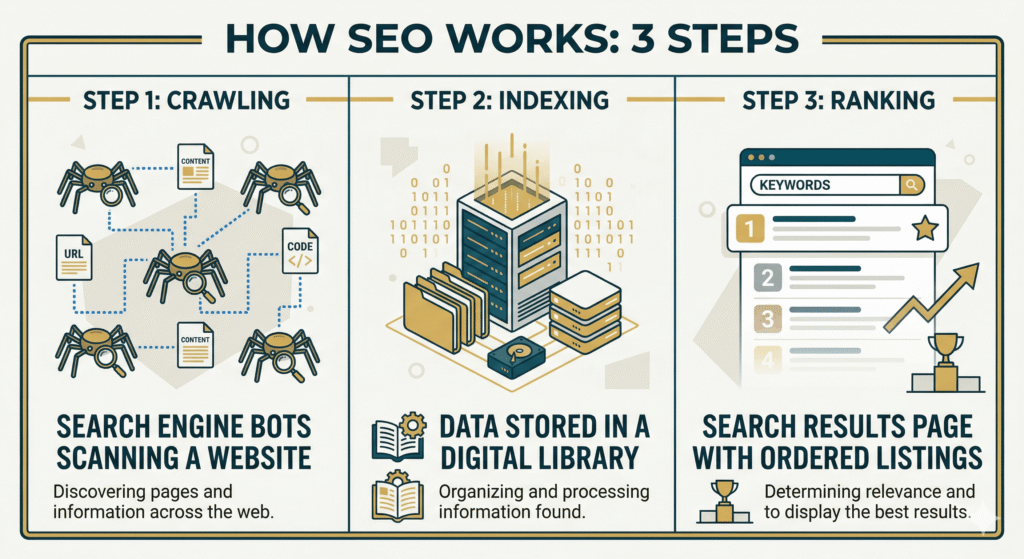
In real life, SEO works through three core steps: crawling (search engines discover your pages), indexing (they store your content), and ranking (they decide where your content appears based on relevance, quality, and authority).
This is when search engine bots (also called spiders) scan your website page by page to discover new or updated content, which means if your site structure is poor, some pages may never be found
After crawling, search engines store your content in their database, and if your content is unclear or duplicated, it may not get indexed properly
This is the process of deciding where your page appears in search results based on hundreds of factors like relevance, authority, and user experience
For example, if you publish a detailed and well-structured article on “best laptops under 50000,” and it clearly answers user questions better than competing pages, Google will gradually move your page higher in rankings as it recognizes its usefulness.

Learn how realtors in the USA generate consistent leads using SEO instead of Zillow. Build a long-term organic lead system...

Learn how to add schema markup in WordPress step-by-step. Boost CTR, get rich snippets, and improve SEO with structured data...
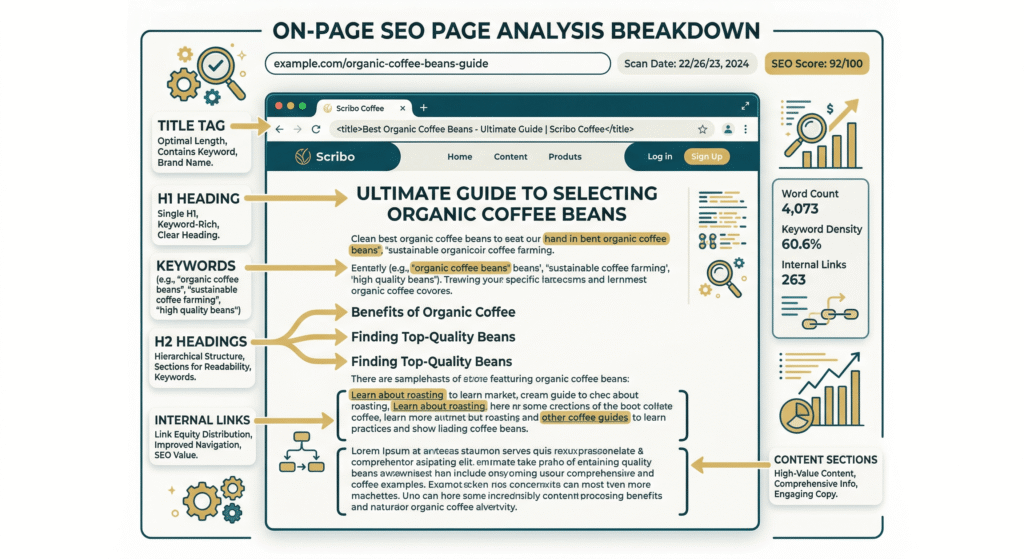
On-page SEO refers to all the elements you control directly within your website and content to help search engines understand your page.
It matters because this is your primary way of signaling to Google what your content is about and how valuable it is for users.
On-page SEO includes multiple components working together:
To optimize properly, you need to focus on clarity, structure, and usefulness rather than just inserting keywords.
For example, instead of repeating “best laptops” multiple times, you create sections like performance, battery life, and price comparison, which naturally include relevant terms while actually helping the reader make a decision.
👉 Learn more about building a complete strategy here:
https://scribomedia.com/seo-strategy-for-ecommerce-small-and-local-business/
Off-page SEO refers to all actions taken outside your website that influence your rankings, primarily by building trust and authority.
It matters because search engines do not rely only on your own content—they also look at how others on the internet perceive and reference your website.
The most important component of off-page SEO is backlinks, which are links from other websites pointing to your content.
Over time, as more high-quality websites link to your content, search engines interpret this as a sign that your content is valuable and reliable.
For example, if a respected tech blog links to your article, that single link can significantly improve your authority compared to dozens of low-quality links.
👉 Deep dive into modern strategies:
https://scribomedia.com/off-page-seo-2026/
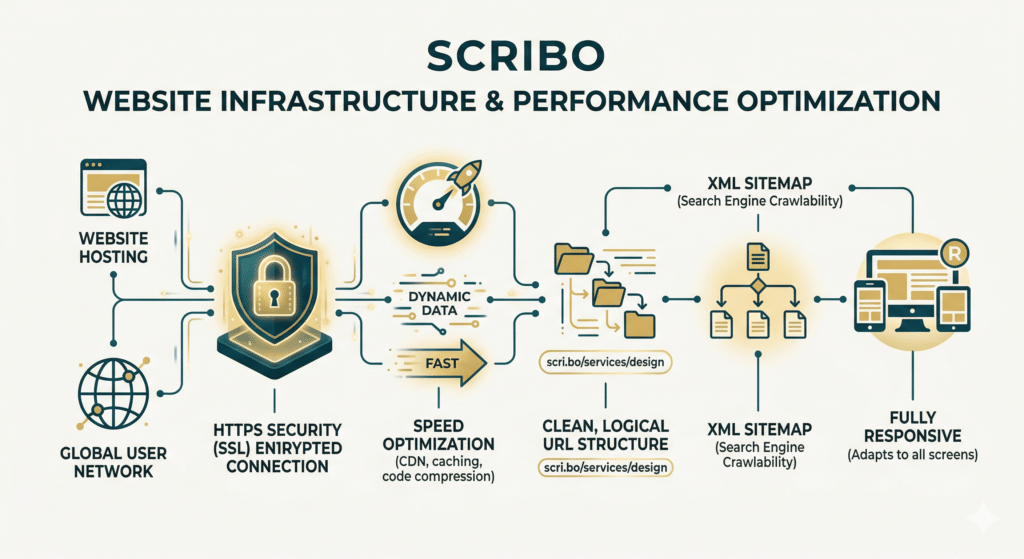
Technical SEO focuses on improving the infrastructure of your website so that search engines can efficiently crawl, interpret, and index your content.
It matters because even the best content will fail to rank if search engines cannot properly access or understand it.
Technical SEO includes several critical factors:
Think of technical SEO as the foundation of a house—without it, everything else becomes unstable.
For example, if your site takes too long to load, users will leave before engaging, and Google will interpret that as a poor experience.
Keywords are the phrases people type into search engines when looking for information, products, or solutions.
They matter because they connect user intent with your content, acting as the bridge between what people search and what you provide.
However, modern SEO has evolved beyond simple keyword usage.
Instead of focusing on exact matches, you should focus on:
For example, if your keyword is “best smartphones,” your content should also naturally include related ideas like battery life, camera quality, and performance to fully satisfy the topic.
Search intent is the underlying reason why a user performs a search, and it plays one of the most critical roles in SEO.
It matters because Google’s main goal is not to match keywords—it is to satisfy user intent as accurately as possible.
There are four primary types of intent:
If your content does not align with intent, it will not rank, even if it is technically optimized.
For example, if someone searches “buy iPhone 15,” showing them a history article about iPhones will not satisfy their intent, so Google will not rank that content highly.
Headings are structural elements (H1, H2, H3) that organize your content into clear sections.
They matter because they improve both user experience and search engine understanding.
Search engines use headings to determine the hierarchy of your content, while readers use them to quickly scan and find relevant information.
For example, using clear headings like “Features,” “Pros and Cons,” and “Final Verdict” makes your content easier to consume and more SEO-friendly.
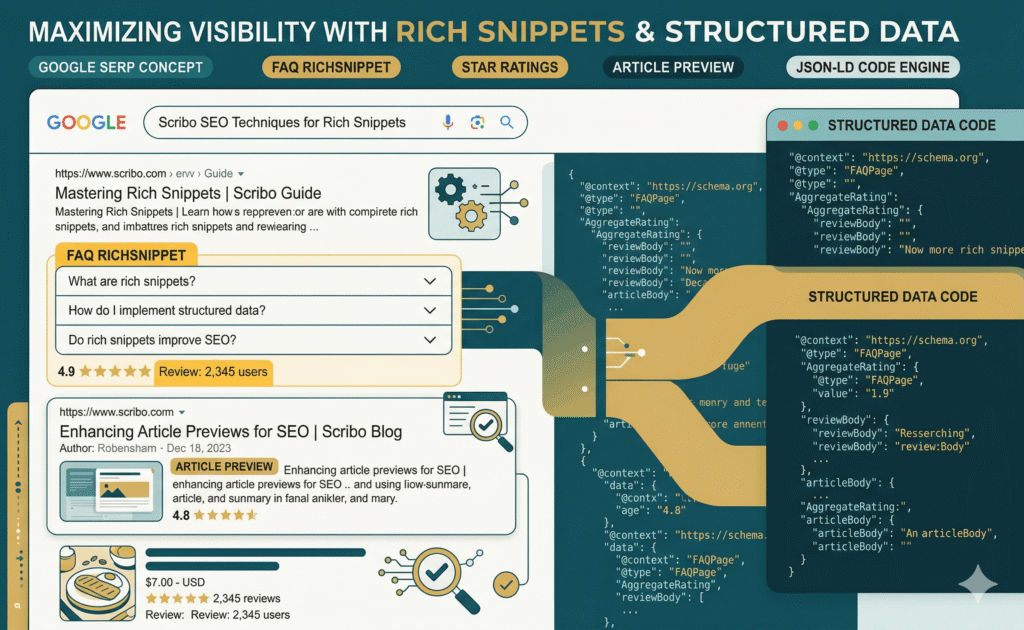
Schema markup is a type of structured data added to your website that helps search engines interpret your content more precisely.
It matters because it enables enhanced search results known as rich snippets, which can significantly increase visibility and click-through rates.
For example, adding FAQ schema can make your questions appear directly in Google search results, giving users immediate answers and increasing your chances of being clicked.
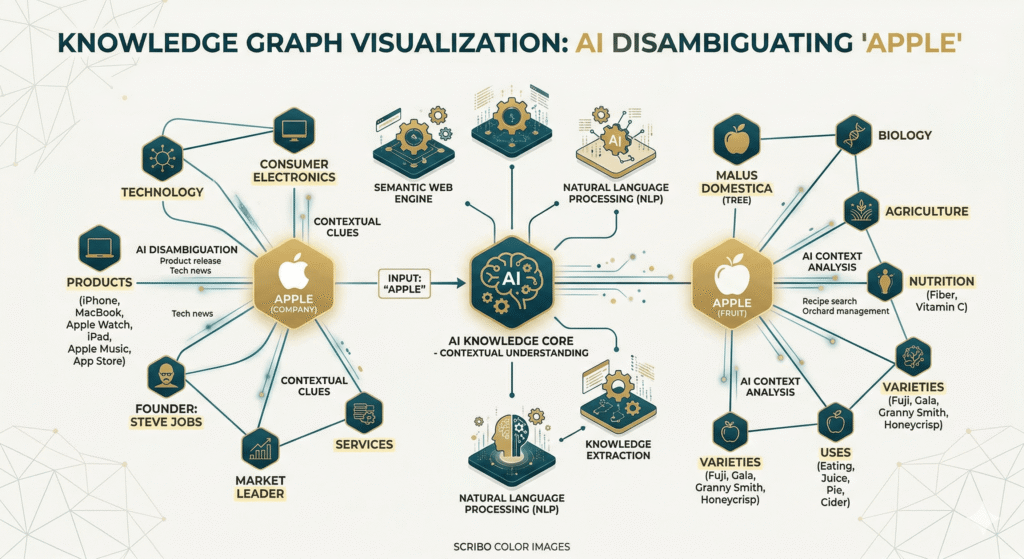
An entity is a distinct and well-defined concept—such as a person, place, organization, or idea—that search engines can understand independently of keywords.
It matters because search engines have evolved from keyword matching to understanding relationships between concepts.
For example, when you mention “Apple,” Google determines whether you mean the company or the fruit based on surrounding content.
This shift means SEO is now about context and clarity, not just keyword repetition.
Topical authority is the level of expertise and trust your website demonstrates on a specific subject.
It matters because Google prefers websites that provide comprehensive coverage rather than isolated pieces of content.
For example, instead of writing a single article on SEO, you create multiple detailed guides covering keyword research, technical SEO, content strategy, and link building.
This signals to search engines that your site is a reliable resource on the subject.
Internal linking is the practice of linking one page of your website to another page within the same domain.
It matters because it helps both users and search engines navigate your site more effectively.
For example, linking a beginner SEO guide to an advanced strategy article keeps users engaged and builds a logical content structure.
Backlinks are links from external websites that point to your site.
They matter because they act as endorsements, signaling to search engines that your content is trustworthy and valuable.
For example, a single backlink from a respected industry website can have more impact than multiple low-quality links.

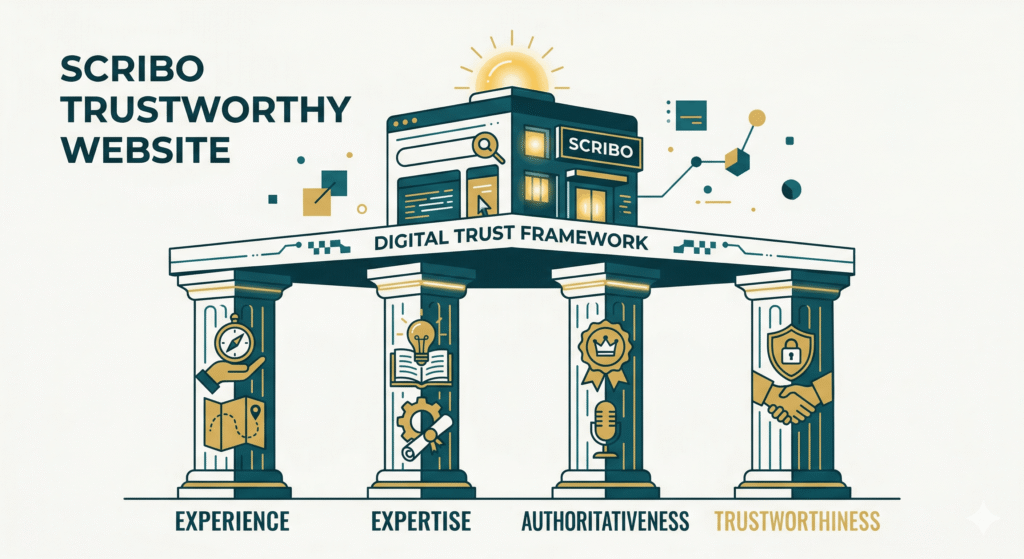
E-E-A-T stands for Experience, Expertise, Authoritativeness, and Trustworthiness.
It matters because Google uses these signals to evaluate the quality and reliability of content, especially for sensitive topics like health or finance.
For example, content written by someone with real-world experience is more likely to rank than generic, surface-level content.
Content optimization is the process of improving your content so that it performs better in search engines and provides more value to users.
It matters because well-optimized content is easier to understand, more engaging, and more likely to rank.
For example, revisiting an old blog post and adding new insights, better formatting, and updated data can significantly boost its performance.
👉 Explore tools that help with this:
https://scribomedia.com/free-seo-tools-2026/
https://scribomedia.com/ai-seo-tools-2026/
Semantic SEO focuses on understanding the meaning and relationships between topics rather than relying solely on keywords.
It matters because search engines now analyze content contextually.
Instead of asking, “Does this page contain the keyword?” they ask, “Does this page fully explain the topic?”
For example, a high-quality article on SEO will naturally include related concepts like backlinks, technical SEO, and content strategy, creating a complete and meaningful resource.
Content clustering is a strategy where you create a central “pillar” page and multiple related “cluster” pages that support it.
It matters because it organizes your content into a clear structure that search engines can easily understand.
For example, a pillar page on SEO linked to detailed subtopics creates a strong content ecosystem.
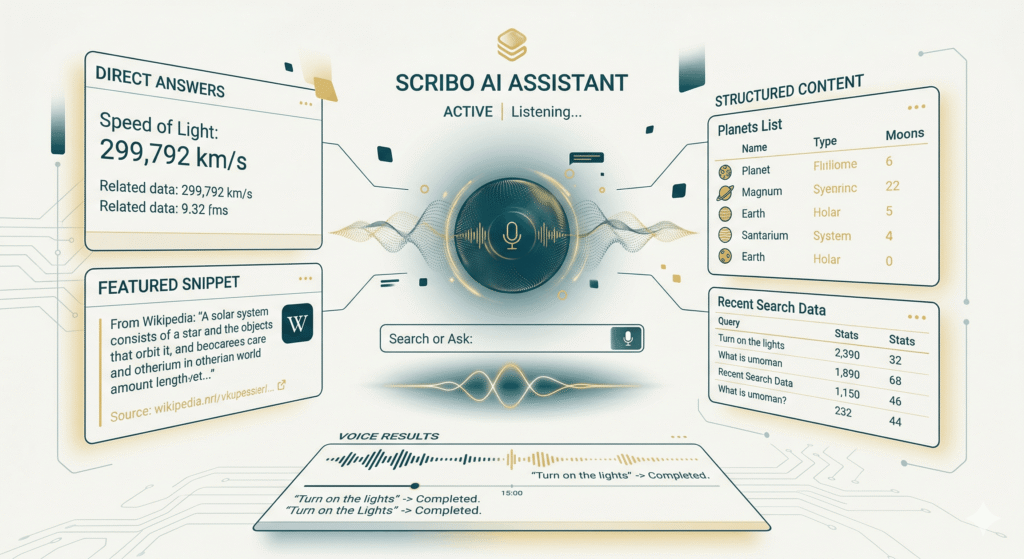
Answer Engine Optimization (AEO) is the practice of optimizing content to appear in direct answers, such as featured snippets, voice search results, and AI-generated responses.
It matters because user behavior is shifting from clicking links to getting immediate answers.
For example, answering questions concisely at the beginning of sections increases the chances of being featured.
👉 Learn how AI search is evolving:
https://scribomedia.com/how-companies-are-optimizing-content-for-ai-search/
AI citations occur when AI systems reference your content as a trusted source in generated answers.
It matters because visibility is expanding beyond search engines into AI-driven platforms.
To earn AI citations:
For example, if your article consistently provides accurate and well-structured answers, AI systems are more likely to use it as a reference.
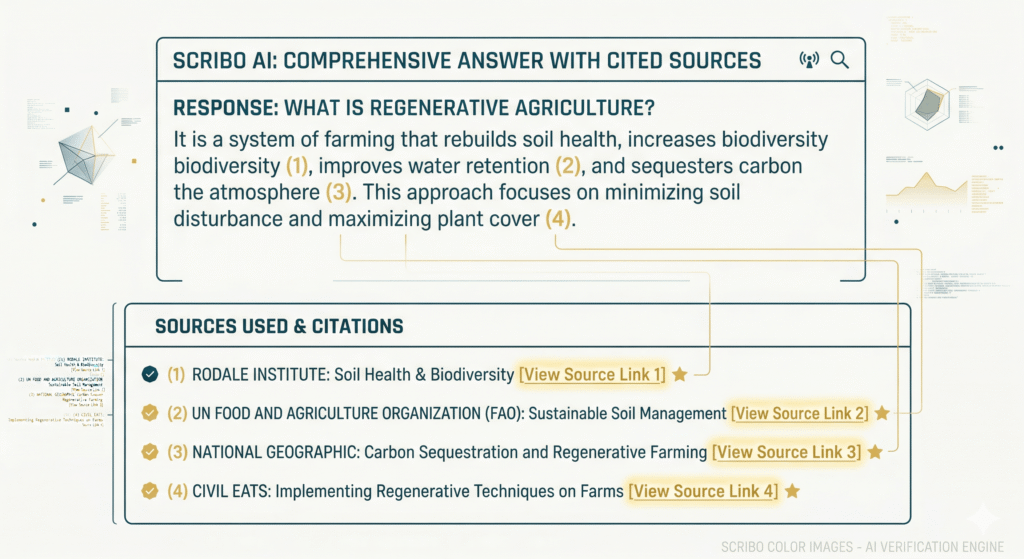
SEO is no longer just about optimizing pages—it is about building a complete knowledge system where every piece of content supports another and creates a strong web of information.
This is where it gets interesting.
The websites that succeed are the ones that:
If you focus on clarity, depth, and usefulness, SEO becomes a natural outcome rather than a technical challenge.
👉 Also explore related digital trends:
https://scribomedia.com/meta-ads-andromeda-update-2026/
https://scribomedia.com/meta-ads-andromeda-algorithm-update/
https://scribomedia.com/how-to-find-clients-for-freelancing-21-ways/
SEO (Search Engine Optimization) is the process of improving your website so that it ranks higher in search engine results for relevant queries.
It is important because higher rankings increase visibility, which directly leads to more organic (free) traffic, better brand awareness, and more opportunities for conversions or sales. In simple terms, SEO helps your content reach the right audience at the right time without relying on paid ads.
On-page SEO focuses on optimizing elements within your website, such as content quality, headings, keyword usage, internal linking, and overall structure to make it easier for search engines to understand your page.
Off-page SEO, on the other hand, involves external factors like backlinks, brand mentions, and online reputation, which help build your website’s authority and trustworthiness. Both work together—on-page tells search engines what your content is about, while off-page proves that your content is credible.
Technical SEO refers to optimizing the backend and infrastructure of your website so that search engines can easily crawl, index, and understand your content. It includes factors like page speed, mobile responsiveness, secure connections (HTTPS), XML sitemaps, and clean URL structures.
Without proper technical SEO, even high-quality content may struggle to rank because search engines may not be able to access or interpret it effectively.
Keywords are the words and phrases that users type into search engines when they are looking for information, products, or services. They act as the connection between user queries and your content, helping search engines match your page to relevant searches.
However, modern SEO is not just about inserting keywords—it’s about using them naturally within meaningful, high-quality content that fully addresses the topic and satisfies user intent.
Search intent is the underlying reason behind a user’s query, and it determines what kind of content Google will rank. It can be informational (learning something), navigational (finding a specific site), transactional (ready to buy), or commercial (comparing options).
Understanding search intent is crucial because even perfectly optimized content will not rank if it does not match what the user is actually looking for.
Schema markup is a form of structured data that you add to your website’s code to help search engines better understand your content.
It allows search engines to display enhanced results, such as FAQs, star ratings, product details, and more, directly in search listings. This improves visibility and click-through rates because your result stands out and provides immediate value to users.
An entity in SEO is a clearly defined concept, such as a person, place, brand, or idea, that search engines can understand independently of keywords.
Entities help search engines interpret context and relationships between topics, reducing ambiguity in search results. This is important because modern SEO is shifting from keyword matching to understanding meaning, which allows search engines to deliver more accurate and relevant results.
Topical authority is the level of expertise and trust your website builds by covering a subject in depth through multiple related pieces of content. Instead of writing a single article, you create a network of interconnected content that addresses all aspects of a topic.
This signals to search engines that your site is a reliable and comprehensive resource, which increases your chances of ranking higher across multiple related keywords.
Backlinks are links from other websites that point to your site, and they act as signals of trust and credibility in the eyes of search engines.
High-quality backlinks from authoritative and relevant websites can significantly improve your rankings because they indicate that your content is valuable and worth referencing. However, low-quality or spammy backlinks can have the opposite effect, so quality always matters more than quantity.
Answer Engine Optimization (AEO) is the process of optimizing your content to appear in direct answers, such as featured snippets, voice search results, and AI-generated responses.
It focuses on providing clear, concise, and well-structured answers to user queries so that search engines and AI systems can easily extract and display them. AEO is becoming increasingly important as users expect quick answers instead of browsing multiple links.
AI citations occur when AI tools like ChatGPT, Google AI, or other answer engines reference your content as a source in their responses. These citations are important because they represent a new form of visibility beyond traditional search rankings.
To earn AI citations, your content needs to be clear, authoritative, well-structured, and comprehensive enough for AI systems to trust and use as a reliable reference.
Semantic SEO focuses on optimizing content based on meaning and context rather than just exact keywords. It involves covering related concepts, answering multiple related questions, and building a complete understanding of a topic.
This approach helps search engines see your content as more valuable and relevant, which improves rankings and user satisfaction.
Internal linking is the practice of linking one page of your website to another page within the same domain.It helps users navigate your site more easily and allows search engines to discover and understand the relationship between your content.
Proper internal linking also distributes authority across pages, strengthens topical relevance, and improves overall SEO performance.
Written by:
https://www.linkedin.com/in/contentwriterakashgupta/