June 1, 2026/
Learn how to adapt your SEO strategy for AI search, GEO, and agentic discovery. Discover frameworks that help brands earn...
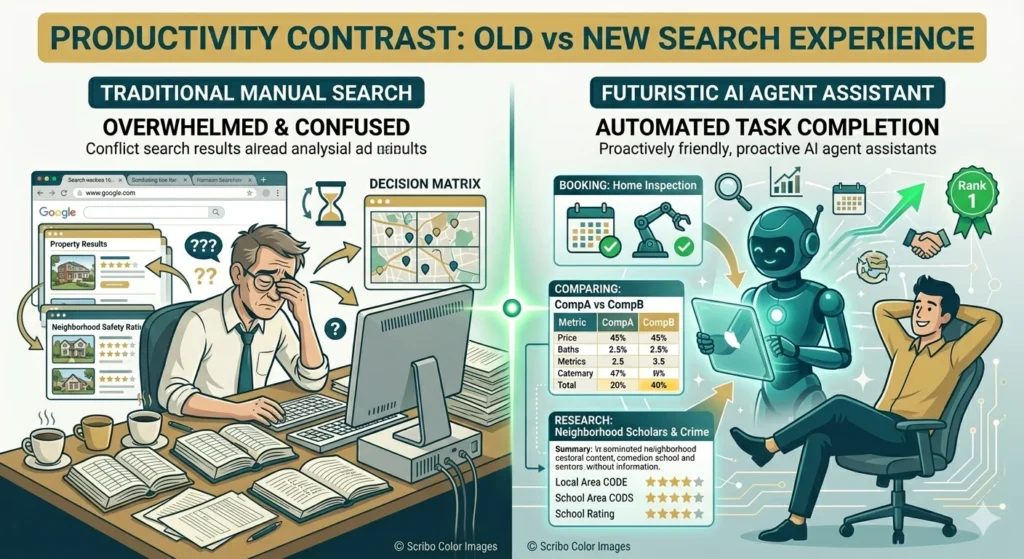
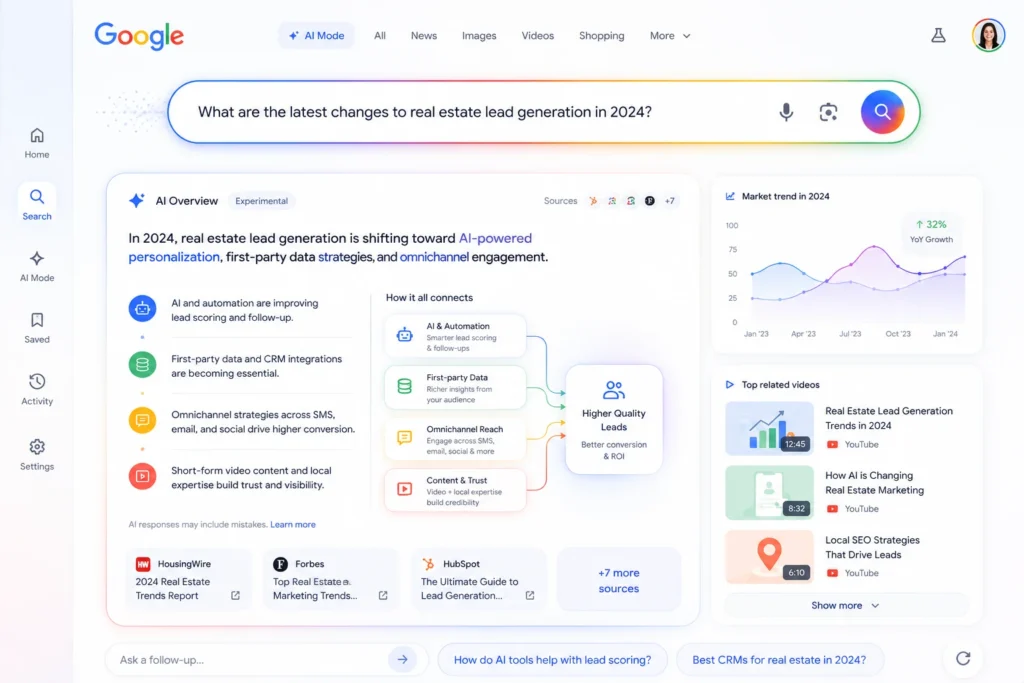
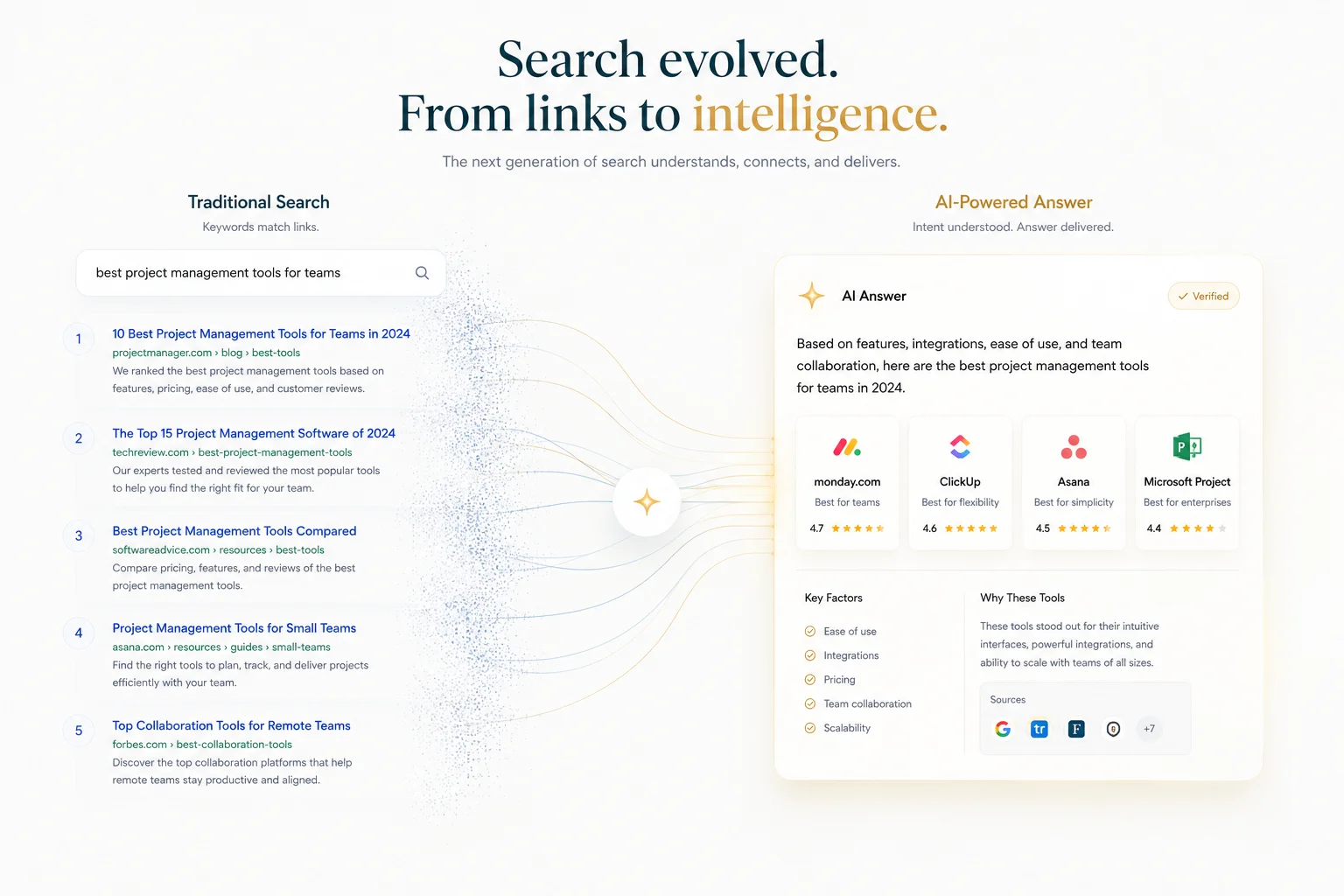
Google Search is evolving from a simple query-and-click experience into an AI-powered answer engine that synthesizes information from multiple sources in real time. Instead of ranking pages, the new model prioritizes structured, trustworthy, and easily extractable content. For brands, visibility now depends on becoming a cited source within AI-generated responses, making EEAT, topical authority, and structured content essential. The future of search is less about ranking #1 and more about being referenced by AI.
The era of the ten blue links is officially over, and the AI agents have taken the wheel. If your strategy still relies on keyword stuffing and acquiring random backlinks, you are optimizing for a system that Google is actively dismantling.
This guide breaks down exactly what the shift to 24/7 agentic search means for your traffic and how to rebuild your content to be cited by the models that now control the top of the funnel.
If AI agents cannot extract and synthesize your data, your competitors will capture your audience before a human ever sees a search results page.
Feature | Traditional SEO | Agentic Search |
Query Style | 3–4 word short-tail keywords | Conversational prompts averaging 23 words |
Duration | Single session (prompt and answer) | Persistent, 24/7 background monitoring |
User Action | Clicking links to read websites | Allowing AI to synthesize, compare, and act |
Content Goal | Rank webpages on SERPs | Be selected and cited in AI-generated answers |
Traditional search engines operated on a deterministic model where a user typed a query and received a list of matching documents. Agentic search shifts this to a probabilistic model where AI systems act autonomously on your behalf. (Source: Yotpo)
With products like Google’s Gemini Spark, search is no longer confined to an active browser window. These 24/7 agents monitor data, compare products, and trigger workflows in the background without requiring continuous human prompting. (Source: MindStudio)
The implication is clear: your digital assets must be formatted for machine synthesis, not just human scrolling.
This means your content is no longer just being scanned for keyword density. It is being evaluated for entity authority, factual accuracy, and structural clarity by large language models.
Generative AI usage has exploded, with platforms like ChatGPT reaching over 800 million weekly active users by late 2025.
Traditional search volume is projected by Gartner to drop 25% by 2026 as users adopt AI chatbots and virtual agents.
AI search queries average 23 words compared to traditional 4-word searches, demanding highly specific, contextual answers.
Google I/O 2026 revealed Gemini 3.5 Flash, an infrastructure built specifically for multi-step reasoning and persistent context.
Session-based AI is reactive, whereas agentic AI proactively tracks updates, pricing, and industry changes over time.
Google’s shift to an agentic model is a direct response to fundamentally changing consumer behavior. Users are abandoning fragmented, multi-tab research in favor of unified AI systems that deliver synthesized answers instantly. (Source: Geoptie)
At Google I/O 2026, the company introduced Gemini Spark, signaling the move from single-query search to persistent, asynchronous AI operations. This architecture allows AI to retain context across long-running tasks and execute multi-step workflows. (Source: Medium)
Information retrieval is now continuous, forcing brands to update data in real-time.
Because these agents monitor the web continuously, the definition of content “freshness” has radically changed. Static pages that are only updated annually are entirely invisible to an AI looking for real-time market fluctuations or pricing changes.
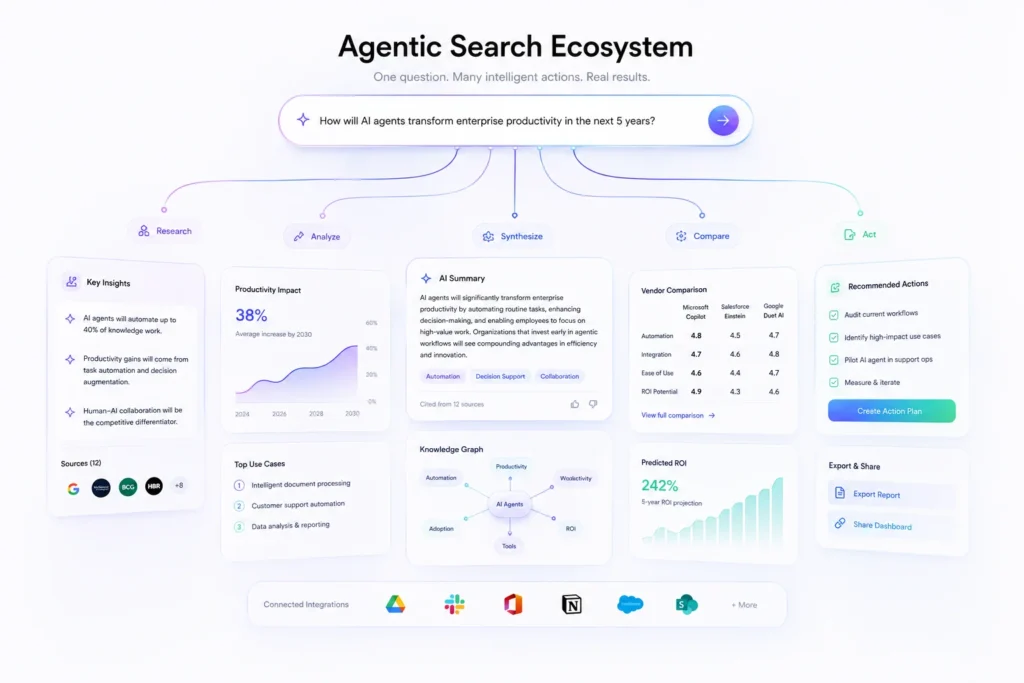

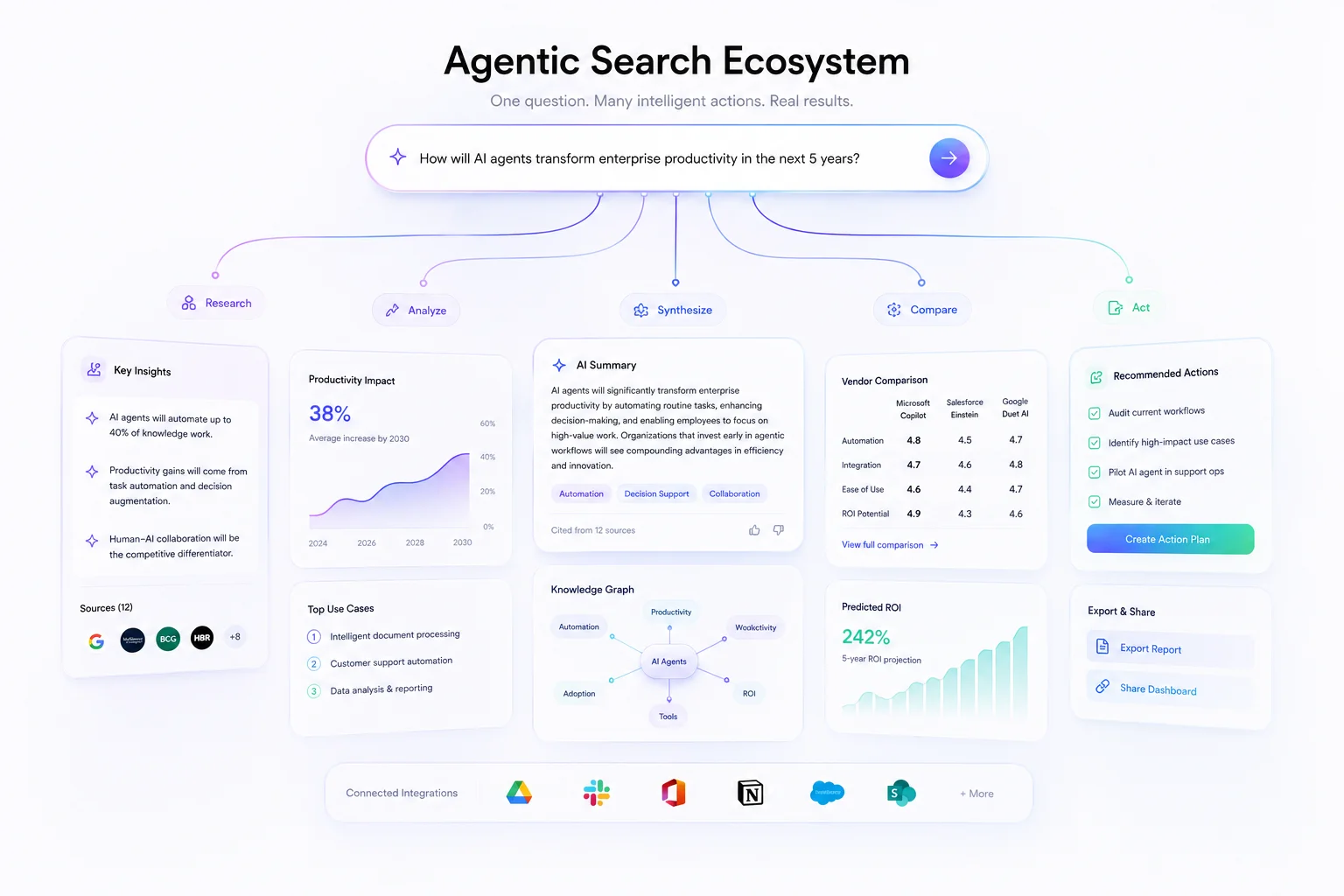
Learn how to adapt your SEO strategy for AI search, GEO, and agentic discovery. Discover frameworks that help brands earn...
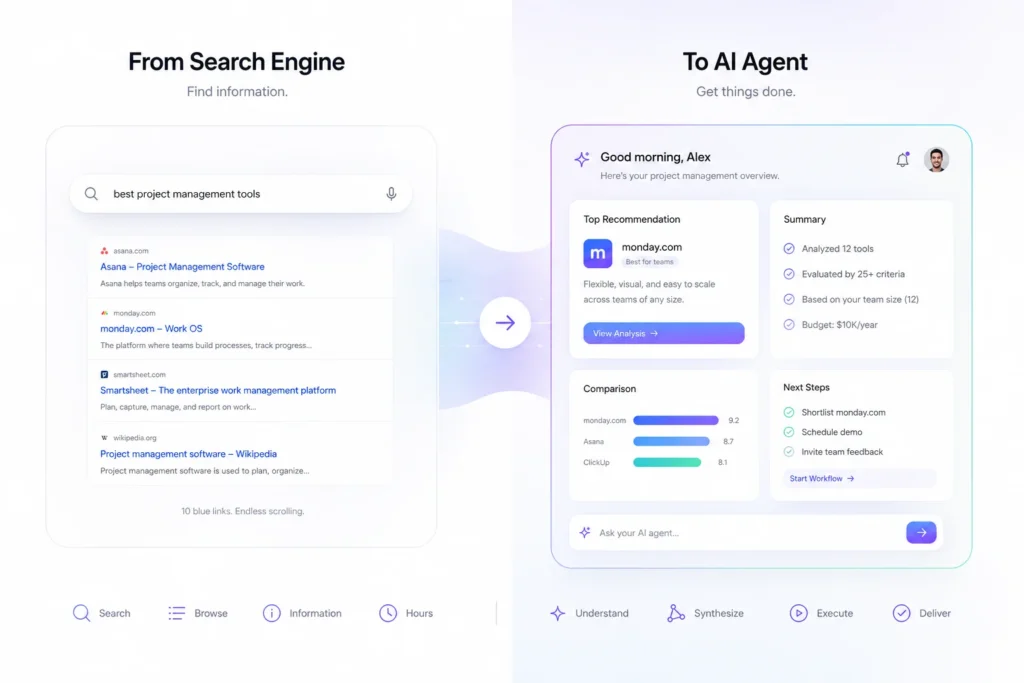
Learn how to transition from traditional SEO to Generative Engine Optimization (GEO) and rank in AI-powered search, agentic search, and...
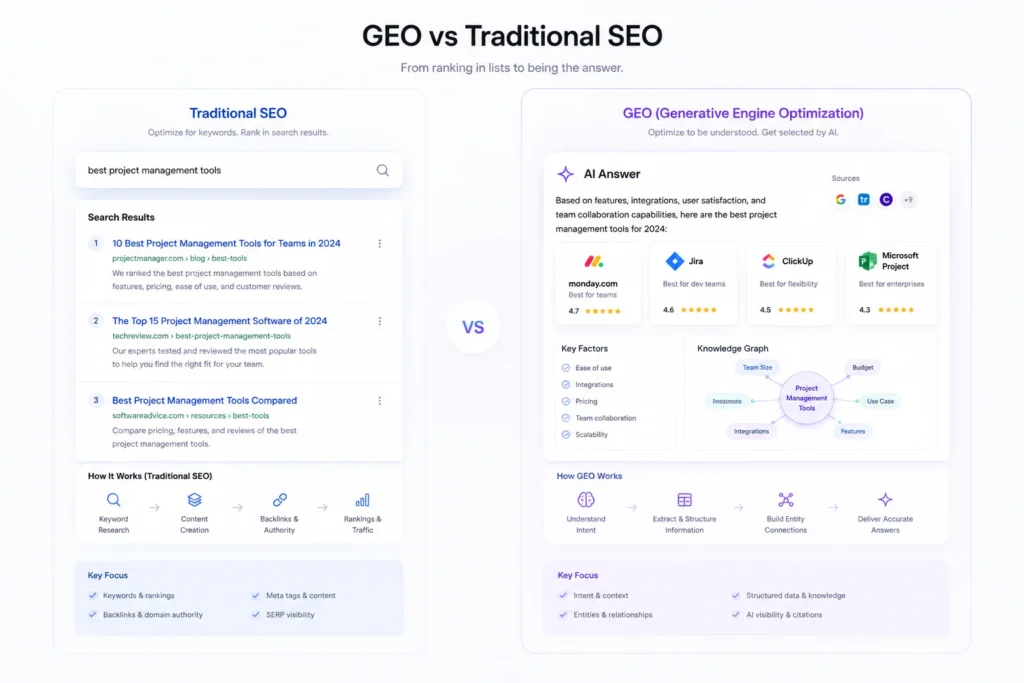
Quick Answer: Yes, if it relies entirely on high-volume, short-tail keywords and superficial backlinks. Content built for 3-word queries is structurally misaligned with how modern AI models retrieve, synthesize, and cite information. To survive, you must pivot to Generative Engine Optimization (GEO).
A traditional SEO approach focuses on tricking a crawler into ranking a URL, often sacrificing readability for keyword density. In contrast, Generative Engine Optimization (GEO) focuses on structuring data so large language models can seamlessly extract and cite it. (Source: Justwords )
Early GEO adopters are seeing massive returns, with some reporting that 32% of their sales-qualified leads now originate from generative AI search. Traffic from these platforms converts significantly higher because the AI has already vetted the information before presenting it to the user. (Source: Geoptie)
If you do not adapt, you risk total erasure from the top of the funnel.
This creates a critical “zero-click” environment where the AI provides the answer directly on the search engine results page. If your site is not cited as the source of that answer, you will lose the brand visibility and the subsequent click-through traffic entirely.
Extractability: Data presented in structured formats like tables, lists, and summary blocks rather than buried in prose.
Entity Authority: Strong semantic relationships between your brand and the topic, verified by tier-1 data banks like Wikidata.
Citable Facts: Concrete statistics, specific claims, and original research that the AI can confidently attribute to your brand.
Comprehensive Depth: Content that answers the primary intent, implicit follow-up questions, and long-tail variants.
Freshness and Recency: Real-time accuracy on pricing, product features, and industry developments.
When an AI agent evaluates a page, it uses Retrieval-Augmented Generation (RAG) to “read” the content before deciding if it is trustworthy enough to synthesize. If your pricing or feature comparisons are hidden inside dense narrative paragraphs, the AI will simply skip them. (Source: Yotpo)
Agents require explicit data markers to build the custom generative UIs and comparison tables that users now expect. This is why formatting choices like JSON-LD schema, clear H2 headings, and bolded key terms are no longer optional. (Source: Trantor)
Trust is established through structured facts, not flowery marketing copy.
Beyond just readability, the AI checks your brand’s “Source Stack” to determine credibility. If your claims are not corroborated by verified data banks or high-trust user content, the model will prioritize a competitor who has established stronger entity authority.
Map the logical journey: Sequence your headings as exact questions a user would naturally ask in progression.
Deploy the Answer First block: Open every single section with a data table, bulleted list, or quick summary.
Keep paragraphs ruthlessly short: Limit every narrative paragraph to a maximum of two sentences and a single idea.
Cite primary sources inline: Provide full URLs for every external claim to give the AI verification confidence.
Force visual breaks: Break up text walls every two to three paragraphs to maintain human readability.
This transition requires abandoning the outdated idea that word count and keyword density dictate an article’s value. Instead, you must architect your pages so that every major section acts as an independent, highly extractable knowledge node.
To start, you must audit your existing high-traffic pages and strip away all introductory fluff. Move your core claims into bulleted lists or comparison tables at the very top of each section so agents can scrape them instantly.
You must also cite primary sources relentlessly, as generative models prioritize corroborated data over unsupported opinions.
Internal linking remains important, but it must be highly contextual. how to build authoritative site architecture for AI crawlers will guide you on passing entity confidence across your domain.
Audit Phase | Focus Area | Actionable Deliverable |
Structural Analysis | Heading formats and paragraph lengths | Conversion of topic labels into conversational queries |
Extractability Check | Presence of data tables and lists | Implementation of “Answer First” blocks in all sections |
Citation Verification | Source quality and inline linking | Addition of verified URLs to all factual claims |
Crawler Accessibility | AI bot blocking and visibility | Removal of robots.txt blocks against major AI crawlers |
A true GEO audit evaluates how easily a Large Language Model can parse, verify, and extract your claims. It moves beyond traditional technical SEO metrics like time-to-first-byte and focuses heavily on structural feature engineering (Yu, 2026) (Source: arXiv ).
You must analyze whether your headings are phrased as conversational queries, as this mirrors how multi-agent systems process user intent. Furthermore, you need to ensure that your domain does not inadvertently block AI crawlers, as blocked sites are significantly less likely to be retrieved by AI Overviews (Grossman et al., 2026) (Source: NJIT).
An audit is not a one-time fix; it is the foundation of a completely new content operating system.
If your content cannot pass a basic extractability check, you are essentially invisible to the future of search.
Adopt Answer-First Formatting: Open every major section with a declarative summary, bulleted list, or data table.
Optimize for Conversational Queries: Target long-tail, 20+ word compound questions instead of broad keywords.
Integrate Primary Citations: Embed verifiable outbound links and expert quotes directly next to your claims.
Eliminate Fluff: Ensure every sentence contains a specific entity, fact, or actionable takeaway.
Update Continuously: Audit and refresh your highest-converting pages monthly to trigger agentic monitoring systems.
The first step in executing a GEO strategy is redesigning your content architecture to serve both machines and humans simultaneously. You must give the AI agent the structured data it needs to scrape immediately, followed by the narrative storytelling that converts human readers. (Source: Yotpo)
To capture conversational AI traffic, research question-based keywords using tools that reveal natural language prompts rather than traditional search volumes. Content must address compound questions, like asking for the best CRM that specifically integrates with both Gmail and mobile platforms. (Source: Geoptie)
Your digital presence is now a dynamic database answering user prompts in real-time.
Finally, you must actively manage your brand’s digital twin to prevent AI hallucinations. If an agent states incorrect information about your services, you must correct it through your structured data, PR channels, and knowledge graph updates.
The transition to agentic search is not a future possibility; the infrastructure is already deployed and fundamentally reshaping how users access information online. If you continue treating search as a session-based keyword game, your brand will become invisible to the AI agents mediating the internet.
By adopting Generative Engine Optimization, structuring your data for extractability, and building deep entity authority, you ensure your business remains the cited source in the zero-click web. This proactive shift is the only way to safeguard your visibility and turn AI chatbots from a threat into your most powerful lead generator.
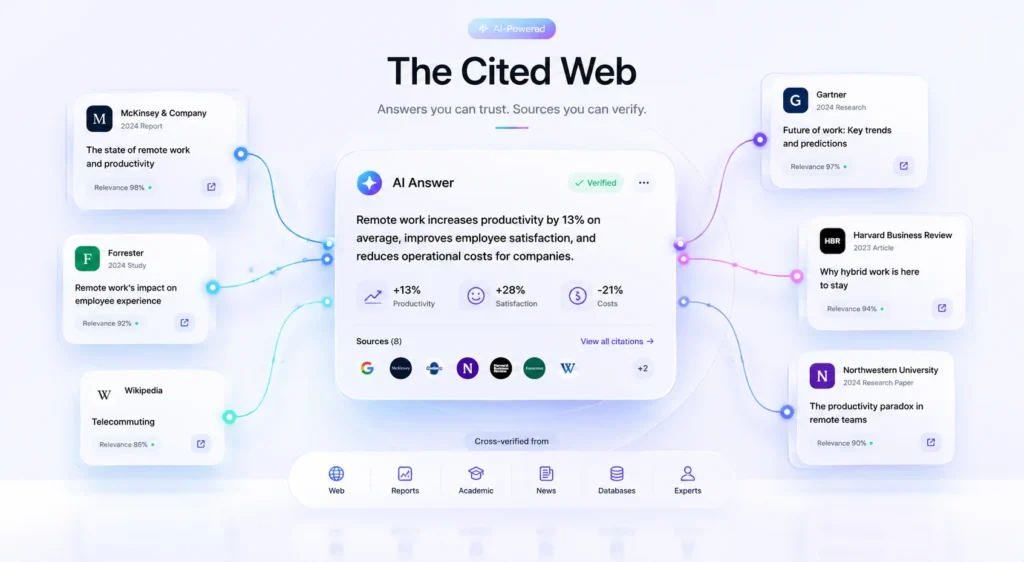
Traditional SEO focuses on ranking web pages on a search engine results page using keywords and backlinks. Generative Engine Optimization (GEO) focuses on structuring content so it can be extracted, synthesized, and cited directly by AI language models. GEO prioritizes factual density and entity authority over keyword frequency.
Gemini Spark shifts search from a reactive, session-based model to a proactive, 24/7 agentic system. It runs continuously in the background, monitoring data, tracking updates, and executing multi-step workflows without needing constant human prompts. This means search is now an ongoing automated process rather than a one-off query.
No, traditional SEO remains relevant for navigational queries and legacy search engine usage. However, as generative AI captures a massive share of informational and transactional queries, relying solely on traditional SEO will severely limit your traffic. You must integrate GEO tactics to capture the growing segment of AI-driven users.
While both require clear, concise formatting, GEO goes much deeper than snippet optimization. GEO requires building broad entity authority, ensuring cross-platform factual consistency, and optimizing for multi-turn conversational agents that reason through data. It is about becoming part of the AI’s core knowledge base, not just winning a single layout feature.
Start by structuring your pricing, feature comparisons, and integration lists into clean HTML tables and bulleted lists. Ensure your technical documentation is comprehensive and explicitly answers complex, compound questions your target accounts are asking. Finally, build entity authority by securing mentions in high-trust tier-1 data banks and industry publications.
Tools like Profound and Evertune are excellent for monitoring your brand’s visibility and citations across multiple AI models. For semantic architecture and execution, Surfer SEO has adapted its platform to support topical mapping and entity graphing. Platforms like Goodie AI are also emerging to help manage brand safety and correct AI hallucinations.
AI search queries average 23 words, meaning users are asking highly specific, multi-layered questions rather than basic keywords. To capture this traffic, your content must address primary intents alongside implicit follow-up questions in a logical flow. Shallow, keyword-stuffed articles cannot satisfy the depth required by these conversational prompts.
RAG is the framework AI models use to fetch real-time, external information before generating a response. When a user asks a question, the agent retrieves relevant data from trusted websites to ground its answer in facts rather than relying solely on its training data. If your content is structured clearly, it is more likely to be retrieved and cited during this process.
Data tables present information in a highly structured, machine-readable format that AI models can instantly parse. When an agent needs to build a dynamic comparison or generative UI for a user, it pulls from sources where variables are explicitly categorized. Hiding the same data inside a dense paragraph drastically reduces the chances of extraction.
Traditional tools are still useful for understanding baseline topical demand, but they often miss the conversational nuance of AI search. You should supplement them with intent-focused tools that analyze long-form prompts and compound questions. The goal is to map the entire reader journey, not just target isolated high-volume terms.
Because agentic systems monitor the web continuously for changes, high-value commercial pages should be audited and refreshed at least monthly. Adding recent statistics, updating pricing, and revising FAQs signals to the AI that your content reflects current reality. Stagnant content quickly loses citation priority to fresher sources.
A digital twin refers to the AI model’s internal representation of your brand, products, and facts. Managing this involves ensuring your entity data is accurate across Wikipedia, Google Business Profiles, and industry databases. If your digital twin is flawed, the AI will confidently serve hallucinations about your company to potential customers.
Sources
Yotpo — https://www.yotpo.com/blog/generative-engine-optimization-tools/ — Explanation of probabilistic search models, RAG, and GEO tools.
MindStudio — https://www.mindstudio.ai/blog/what-is-gemini-spark-google-24-7-agent — Analysis of Gemini Spark’s 24/7 persistent architecture and agentic capabilities.
Geoptie — https://geoptie.com/blog/generative-engine-optimization — Statistics on generative AI adoption, search behavior shifts, and GEO strategy implementation.
Medium — https://medium.com/data-science-in-your-pocket/google-gemini-spark-googles-24-7-ai-agent-7efcbb9e76a7 — Details on Google’s shift to multi-agent workflow orchestration.
Justwords — https://www.justwords.in/blog/google-io-2026-seo-content-marketing/ — Insights on Google I/O 2026 and the structural misalignment of traditional SEO.
Trantor — https://www.trantorinc.com/blog/what-is-generative-engine-optimization — Best practices for structuring content for AI extraction and semantic comprehension.